Liturgy and the Liturgical Year

During the last RCIA meeting, the question came up about the real presence in the Eucharist: is this really Jesus, or is it just a cracker and some wine/grape juice?

As Catholics, we believe that when the priest consecrates, at that exact moment, something changes the bread and wine into the Body and Blood of Jesus Christ. He is present in that physical substance–His IS that Physical Substance.

Jesus is also present in worship, in liturgy. When we take part in any of the rituals of our church, Jesus is there. He tells us that when two or more gather in His name, He is present.

He is also present in the moments of solitude when we pray.

This morning, I woke with trouble on my mind. Like the body of water the disciples were on, my mind raced like the boat that bounced up and down.

I prayed. I asked Jesus for help. In that moment, the voice that came back said not to worry, that He’d been helping for quite some time now and would continue to do so.

When we make the leap to move to the bow of the boat, wake Jesus, and ask Him to help, He will.

As we enter the first days of Advent, we have the renewed opportunity to connect with the stillness our faith can provide. Each day gives us the chance to move to the front of the boat, to connect with Jesus, wake Him from His slumber, embrace, quietly whisper, and listen. While the world shakes and drops underneath us from all four corners, take time this Advent to be still, to consider the Nativity, to find peace.

Liturgy and the Liturgical Year

Presence, Grace, Connection

There have been times when I’ve felt God’s presence; at the words of consecration, He is there, sometimes loudly and lovingly, sometimes softly and nurturing, sometimes touching my pain, my grief, my sorrow, my frustration, my unworthiness.

Other times, I’ve felt the presence of God by His seeming absence from my life.

I experienced a very long dark night in which my grief was overwhelming. My cup runneth over with tears that I had no easy explanation for. Those around me simply did the best they could to compensate for my inability to function, and were unable to understand what was going on. I was so full of this darkness that I wasn’t able to react to what was going on around me except with tears, grief, pain, sorrow.

I reached for explanations beyond medicine because part of the philosophy of those I was running with was that medication was a sign of weakness, and we needed to be stronger than that. There was an expectation of needing to measure up, to “man up”, that I was very much aware of being unable to meet.

Looking back with clarity now, I know there were two components to what was happening to me–there was the very much medical imbalance of chemistry in my brain that was creating a recurring loop of sorts. There was also the diabolical component. When there is a weakness present, it makes it easier for those that want to take advantage to do so. The diabolical prefers to allow an individual to do the work on their own behalf, to feed on what is provided, and to stir the coals to keep the fire burning. In my case, this was what I call the three year dark night, although it may have been a longer or shorter time.

Looking back in clarity now, Jesus was beside me the entire time I was there. I was simply so focused on what was going on that I wasn’t able to see that the darkness of my life was allowed to go so far and no further. I loathed the idea of suicide and became even more deeply entrenched in my grief because of that. That was the bar that Christ lowered.

Why did I go through that dark night? What purpose could that pain have served?

The first thing it did was to lay the foundation for me to pursue my vocation. Had I not been in the deepness of that dark night I would not have come out the way I had. In many ways, the people around me didn’t believe for years that it was over–that may have been their own darkness no longer having a way to relate. I remember the almost frustrated way that people saw my sudden impulse to laughter, that wellspring of joy that simply couldn’t be released or sometimes controlled. They would ask, “Why are you laughing?” and I would respond “Would you rather I be crying?” I felt life again.

This was the presence of Grace in my life. I’d been shown a taste of hell, then very quickly lifted from it. Doors began to open, and when I walked through them, I was met with resentment from the people I ran with. “Why is he going to university? What does he think he can achieve?” “Who would ever consider hiring you?”

It didn’t matter. There was no resentment because I was free.

Keeping the connection with Christ was easy in the beginning because it was so pure, so present. I took steps to fulfill my vocation, doors opened for people who were supportive and showed me love. More, I was given a means to recognize trauma I’d experienced. It’s still taking time to work through, to heal. I’m still triggered by events in my life–moments that, in the past I would be punished for, or would push through in fear of the punishment are now met with empathy, compassion, and affirmation.

Prayer is the means by which we maintain the connection with the Divine. This takes the form of the formal prayers like the Mass, the rosary, reading with a mind to the Divine, cultivating silence and listening. Soon snow will be falling around us. When it does, and it’s falling softly and gently, go outside and listen. Things seem muffled. There’s a stillness even in the presence of the noises of the city. That’s what prayer is like, what prayer is meant to do. It’s the finding of stillness in the presence of the noise of the world. It’s not meant to remove the noise, but rather to exist along side the noise without dwelling in it.

That stillness is achieved in many ways. The simplest is quiet, repetitive prayer. Choose a short prayer, a simple prayer. Close your eyes and simple repeat the prayer in your mind, over and over. Do this for a short period to being, maybe 5-10 minutes. As the prayer becomes part of your inner dialogue, practice walking through the day repeating the prayer. In time, this becomes part of who you are. You will go to sleep in the prayer, stirring in the middle of the night with the prayer in your thoughts, waking with the prayer before you. Make the prayer a part of your being by repeating it constantly and consistently.

Lord Jesus Christ, Son of God, have mercy on me, a sinner.

My Jesus, mercy.

Hail Mary, full of grace, the Lord is with thee. Blessed art thou amongst women, and blessed is the fruit of thy womb, Jesus. Holy Mary, mother of God, pray for us sinners, now and at the hour of our death.

Hide me in Your Wounds.

Presence, Grace, Connection

Easter Sunday & Trans-formations

At that time, Mary Magdalen, and Mary the mother of James, and Salome bought sweet spices, that coming they might anoint Jesus. And very early in the morning, the first day of the week, they came to the sepulchre, the sun being now risen. And they said one to another: Who shall roll us back the stone from the door of the sepulchre? And looking, they saw the stone rolled back. For it was very great. And entering into the sepulchre, they saw a young man sitting on the right side, clothed with a white robe, and they were astonished. Who saith to them, Be not affrighted; ye seek Jesus of Nazareth, who was crucified: He is risen, He is not here; behold the place where they laid Him. But go, tell His disciples, and Peter, that He goeth before you into Galilee; there you shall see Him, as He told you.

Mark 16:1-7

There were several transformations that occurred on this day.

Principally, Jesus Christ was transformed to the Risen Christ.

Mary Magdalen, Our Blessed Mother, and Salome were transformed from women in grief to the first messengers of the Good News.

Peter is no longer a disciple. He has been transformed into a follower of Jesus, now the first Pontiff, the Vicar.

In like manner, we are transformed by faith, by our moving through the Lent, now Easter, and soon Pentecost.

Today also happens to be Trans Day of Visibility. A member of our congregation put it better than I could’ve said myself:

“(T)oday is Trans Day of Visibility. So maybe a thoughtful prayer for those who struggle every day. It’s a tough row to hoe at times for many…. Education leads to change. Change leads to acceptance. Acceptance makes everyone equal. Equal is good!”

Easter Sunday & Trans-formations

28, 29, 30, 31.

At that time, Jesus said to the crowds of the Jews: Which of you can convict Me of sin? If I speak the truth, why do you not believe Me? He who is of God hears the words of God. The reason why you do not hear is that you are not of God. The Jews therefore in answer said to Him, Are we not right in saying that You are a Samaritan, and have a devil? Jesus answered, I have not a devil, but I honor My Father, and you dishonor Me. Yet, I do not seek My own glory; there is One Who seeks and Who judges. Amen, amen, I say to you, if anyone keep My word, he will never see death. The Jews therefore said, Now we know that You have a devil. Abraham is dead, and the prophets, and You say, ‘If anyone keep My word he will never taste death.’ Are You greater than our father Abraham, who is dead? And the prophets are dead. Whom do You make Yourself? Jesus answered, If I glorify Myself, My glory is nothing. It is My Father Who glorifies Me, of Whom you say that He is your God. And you do not know Him, but I know Him. And if I say that I do not know Him, I shall be like you, a liar. But I know Him, and I keep His word. Abraham your father rejoiced that he was to see My day. He saw it and was glad. The Jews therefore said to Him, You are not yet fifty years old, and have You seen Abraham? Jesus said to them, Amen, amen, I say to you, before Abraham came to be, I am. They therefore took up stones to cast at Him; but Jesus hid Himself, and went out from the temple.

John 8:46-59.

Again, I must apologize for not keeping up. It’s been a week. And every year, I look at the numbers of the posts and say to myself “I’ve done something wrong. It can’t be this far ahead. I must have missed a day.”

But I haven’t.

Today is Passion Sunday, the beginning of the strange period of Lent. Today, I covered the crucifix and the statue of the Blessed Mother with purple cloth; the curtains that usually are pulled back to reveal the mural of the life of Christ behind our altar today remained closed. I left the lights turned off over the pulpit and the altar. At home, my husband came into the oratory and helped me to cover the icons behind the altar. I removed the Blessed Sacrament from the monstrance that usually sits on my altar and replaced it with the crucifix, covered in purple. Some icons are exposed still–I need more purple cloth.

During this period of time, when I say the Office or pray Mass, I always tell myself that the coverings don’t really make much of a difference, but by the end of the first or second day I realize I miss them as much as I miss the alleluia. Parts of the Mass today were omitted.

When I was following the Medicine Wheel path, I would go out into the wilderness and fast. It wasn’t isolated–we were supervised, checked on, and on the fourth day without food and water we were called back in for ceremony and a feast to break the fast. On the first day, I’d usually sleep most of the time. I remember feeling cold, tired. Not hungry or particularly thirsty. By the middle of the third day, I would begin to feel achy. And cold. I slept. On the morning of the fourth day, I’d wake up and look at the sun, pace, and wait for people to come. I always thought it was later in the day than it was, and I’d wait…and wait…and wait. When my friend came to bring me and the others back in, there was a sense of relief; sometimes tears, sometimes laughter, and then the feeling of water moving down my throat, splashing in my stomach, the feeling of the cells of my body beginning to rehydrate again.

We are in the Passiontide of Lent. While the images we hold sacred, that give us hope and inspire us are covered, in a weeks time on Palm Sunday, we will be rejoicing and celebrating Christ’s entering Jerusalem: The King of Glory. Four short days after that, we will be experiencing the agony of the Passion, the silence at the end of Good Friday, the anticipation before the Easter Vigil, and the Vigil celebrating the resurrection when the bells shall ring out, the icons and images will be revealed again.

In the coming week, it’s important to pray for those we love, those who have passed, perhaps even those who have yet to come. It’s important to think of those closest to us who give us joy, to experience gratitude for the miniscule in our lives, like a glass of water. It’s important that, in our suffering and fasting, we unite our pains, our sorrows, our terrors, our anxieties with Christ’s passion.

In the week before Palm Sunday, reach out to a loved one you haven’t spoken to in a while. Take a little less food. Make time for prayer. Praying the Rosary in bed will often allow you to fall asleep before finishing: these are spare part prayers. Think of them as prayers that may have been omitted by others that are now being completed by you.

Spend time in silence, with scripture. Even if it’s just five minutes of the day.

28, 29, 30, 31.

26 & 27.

At that time, Jesus, passing by, saw a man blind from birth. And His disciples asked Him, Rabbi, who has sinned, this man or his parents, that he should be born blind? Jesus answered, Neither has this man sinned, nor his parents, but the works of God were to be made manifest in him. I must do the works of Him Who sent Me while it is day; night is coming, when no one can work. As long as I am in the world I am the light of the world. When He had said these things, He spat on the ground and made clay with the spittle, and spread the clay over his eyes, and said to him, Go, wash in the pool of Siloe – which is interpreted ‘Sent’. – So he went away, and washed, and returned seeing. The neighbors therefore and they who were wont to see him before as a beggar, began saying, Is not this he who used to sit and beg? Some said, It is he. But others said, By no means, he only resembles him. Yet the man declared, I am he. They therefore said to him, How were your eyes opened? He answered, The man who is called Jesus made clay and anointed my eyes, and said to me, ‘Go to the pool of Siloe and wash.’ And I went and washed, and I see. And they said to him, Where is He? He said, I do not know. They took him who had been blind to the Pharisees. Now it was a Sabbath on which Jesus made the clay and opened his eyes. Again, therefore, the Pharisees asked him how he received his sight. But he said to them, He put clay upon my eyes, and I washed, and I see. Therefore some of the Pharisees said, This man is not from God, for He does not keep the Sabbath. But others said, How can a man who is a sinner work these signs? And there was a division among them. Again therefore they said to the blind man, What you say of Him Who opened your eyes? But he said, He is a prophet. The Jews therefore did not believe of him that he had been blind and had got his sight, until they called the parents of the one who had gained his sight, and questioned them, saying, Is this your son, of whom you say that he was born blind? How then does he now see? His parents answered them and said, We know that this is our son, and that he was born blind; but how he now sees we do not know, or who opened his eyes we ourselves do not know. Ask him; he is of age, let him speak for himself. These things his parents said because they feared the Jews. For already the Jews had agreed that if anyone were to confess Him to be the Christ, he should be put out of the synagogue. This is why his parents said, He is of age; question him. They therefore called a second time the man who had been blind, and said to him, Give glory to God! We ourselves know that this man is a sinner. He therefore said, Whether He is a sinner, I do not know. One thing I do know, that whereas I was blind, now I see. They therefore said to him, What did He do to you? How did He open your eyes? He answered them, I have told you already, and you have heard. Why would you hear again? Would you also become His disciples? They heaped abuse on him therefore, and said, You are His disciple, but we are disciples of Moses. We know that God spoke to Moses; but as for this man, we do not know where He is from. In answer the man said to them, Why, herein is the marvel, that you do not know where He is from, and yet He opened my eyes. Now we know that God does not hear sinners; but if anyone is a worshipper of God, and does His will, him He hears. Not from the beginning of the world has it been heard that anyone opened the eyes of a man born blind. If this man were not from God, He could do nothing. They answered and said to him, You were altogether born in sins, and do you teach us? And they turned him out. Jesus heard that they had cast him out, and when He had found him, said to him, Do you believe in the Son of God? He answered and said, Who is He, Lord, that I may believe in Him? And Jesus said to him, You have both seen Him, and He it is Who speaks with you. And he said, I believe, Lord.  And falling down, he worshipped Him.

John 9:1-38

The passion is hinted here, like faint wisps fragrance.

Why is Jesus a threat to those invested in the old ways?

Why is the question who sinned, the blind man or his parents?

Why is blindness associated with sin?

The blind man is turned away by the priests. These are the carriers of the old law and tradition.

When we become transformed, those around us may question because they fear what they do not understand, or the transformation may in some way rock the boat.

We may be called and be afraid of that transformation we witness.

We are walking closer and closer to the Passion now. In your days, be mindful of small blessings.

Be mindful of small moments when you are frustrated, or tired, or angry, or upset.

Bring them forward in the examine at the end of your day, and ask for forgiveness.

Allow God to show you moments where Love is needed, needs to be present.

26 & 27.

21, 22, 23, 24, 25.

At that time, Jesus went away to the other side of the sea of Galilee, which is that of Tiberias. And there followed Him a great crowd, because they witnessed the signs He worked on those who were sick. Jesus therefore went up the mountain, and sat there with His disciples. Now the Passover, the feast of the Jews, was near. When, therefore, Jesus had lifted up His eyes and seen that a very great crowd had come to Him, He said to Philip, Whence shall we buy bread that these may eat? But He said this to try him, for He Himself knew what He would do. Philip answered Him, Two hundred denarii worth of bread is not enough for them, that each one may receive a little. One of His disciples, Andrew, the brother of Simon Peter, said to Him, There is a young boy here who has five barley loaves and two fishes; but what are these among so many? Jesus then said, Make the people recline. Now there was much grass in the place. The men therefore reclined, in number about five thousand. Jesus then took the loaves, and when He had given thanks, distributed them to those reclining; and likewise the fishes, as much as they wished. But when they were filled, He said to His disciples, Gather the fragments that are left over, lest they be wasted. They therefore gathered them up; and they filled twelve baskets with the fragments of the five barley loaves left over by those who had eaten. When the people, therefore, had seen the sign which Jesus had worked, they said, This is indeed the Prophet Who is to come into the world. So when Jesus perceived that they would come to take Him by force and make Him king He fled again to the mountain, Himself alone.

John 6:1-15

In the Catholic life, we are often tempted to fall into the trap of thinking that if we pray hard enough, if we complete the works of goodness or sacrifice enough, we won’t have to encounter bad things in our lives.

Or, alternatively, bad things happen and we cry out, “Why God, if you are infinitely good, do bad things happen to me?”

As Catholics, as Christians, we can’t expect that our lives will be easy and not include moments where we come face to face with Crosses. Or, as one of my favorite people, the Venerable Archbishop Fulton Sheen was fond of saying, there is no Easter Sunday without first a Good Friday.

Our lives will have consolation moments and desolation moments. We fortify ourselves in the moments of consolations for the moments when desolations hit us.

When we are offered loaves and fishes, we can be grateful for the miracle we’ve experienced. But we can’t expect them every day, nor should we. When God provides for us, we accept in gratitude, in relief, sometimes with tears; but it is up to us to stand once the gift has been received, walk on, and find strength to return to our lives.

When we dwell in the desolation of our experiences, we risk springing the trap of Old Scratch–specifically, dwelling in our desolation prevents us from using the gifts and talents we have to serve God, our community, and to work in fulfilling our lives.

21, 22, 23, 24, 25.

19 & 20.

At that time, Jesus said to His disciples: If your brother sin against you, go and show him his fault, between you and him alone. If he listen to you, you have won your brother. But if he do not listen to you, take with you one or two more so that on the word of two or three witnesses every word may be confirmed. And if he refuse to hear them, appeal to the Church, but if he refuse to hear even the Church, let him be to you as the heathen and the publican. Amen I say to you, whatever you bind on earth shall be bound also in heaven; and whatever you loose on earth shall be loosed also in heaven. I say to you further, that if two of you shall agree on earth about anything at all for which they ask, it shall be done for them by My Father in heaven. For where two or three are gathered together for My sake, there am I in the midst of them. Then Peter came up to Him and said, Lord, how often shall my brother sin against me, and I forgive him? Up to seven times? Jesus said to him, I do not say to you seven times, but seventy times seven.

Matthew 18:15-22

Consider here that we ourselves are a sibling to ourselves. When the truth of a thing comes to light, we must own it if we have a part in it, ask for forgiveness when and where it is appropriate, and accept the outcome. In the thinking of the twelve steps, this would be done “except when to do so would injure them or others.”

Whatever we bind on earth is bound in heaven. If we are bound by prejudice, anger, trauma, we cannot expect to easily go into prayer and find peace because we bring these things with us. How do we let these things go?

Slowly, over time, with consistency. If we notice a behavior that is detrimental to our well being, we recognize it, we look for the root of it, and we work to resolve it; writing, speaking to someone (a friend, a therapist), these are all good tools in helping to not just bring these things to the surface, but work to allow them minimal negative influence in our lives.

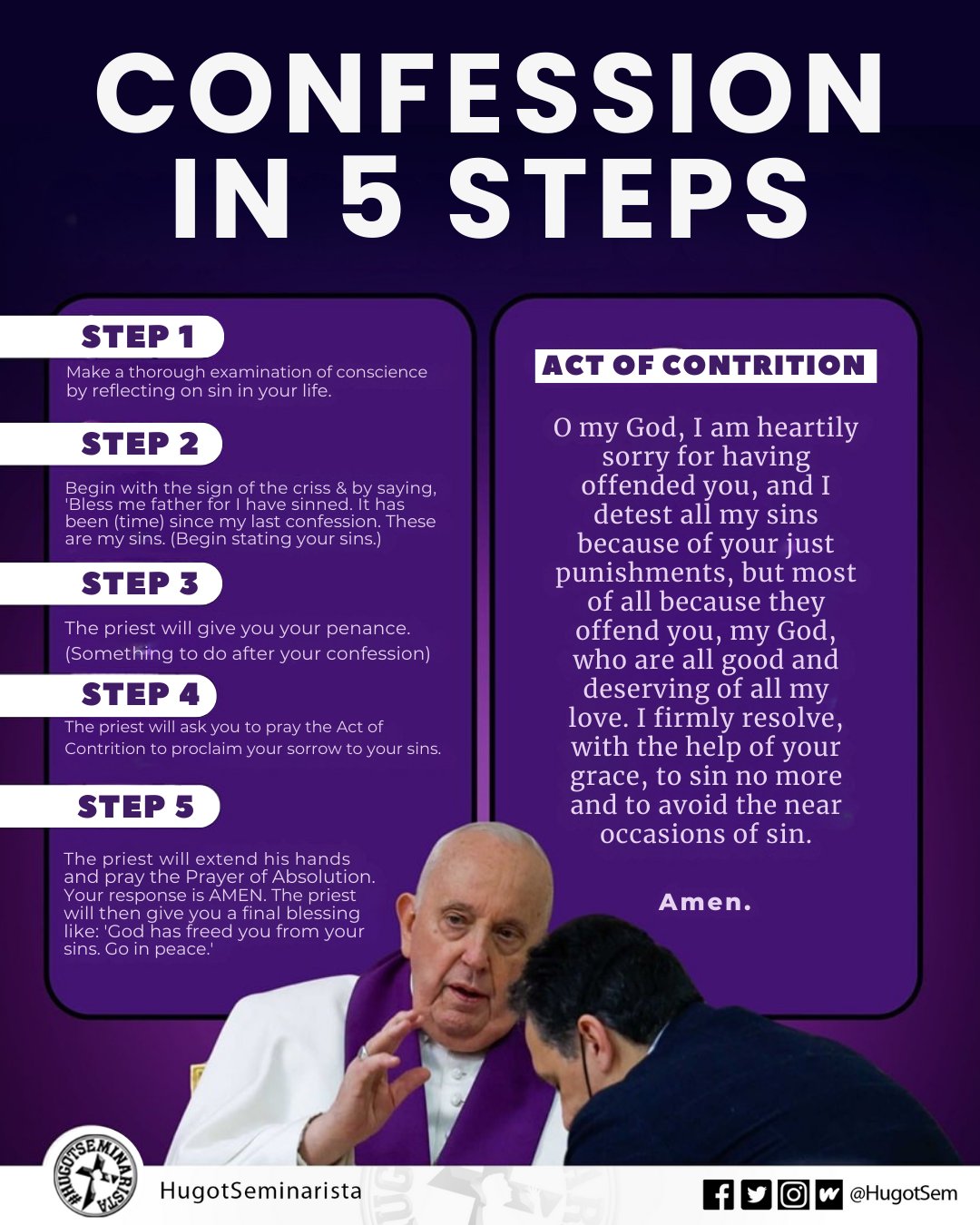
I’ve been talking to our worship community a lot about the benefits of confession. Truly, this is one way that we can release the hold that trauma and it’s cohorts has on us. What does it look like?

I described confession as being a conversation aimed towards addressing those things which have kept us from a closer encounter with God, with Jesus Christ. In a confession, we speak of those things we may have kept hidden from the world, trusting that what is said is kept in a sacred bond between the confessor and the one confessing. It can be a literal naming of sins, and a reconciliation, but it can and should be more than that.

19 & 20.

18.

Brethren: Be imitators of God, as very dear children and walk in love, as Christ also loved us and delivered Himself up for us an offering and a sacrifice to God to ascend in fragrant odor. But immorality and every uncleanness or covetousness, let it not even be named among you, as becomes saints; or obscenity or foolish talk or scurrility, which are out of place; but rather thanksgiving. For know this and understand, that no fornicator, or unclean person, or covetous one – for that is idolatry – has any inheritance in the kingdom of Christ and God. Let no one lead you astray with empty words; for because of these things the wrath of God comes upon the children of disobedience. Do not, then, become partakers with them. For you were once darkness, but now you are light in the Lord. Walk, then, as children of light, for the fruit of the light is in all goodness and justice and truth.

Eph 5:1-9

Today was snowing heavily–I checked with the community and we made the decision to worship virtually from the oratory at my home.

I spoke in my homily today about how a house divided falls, referring to the Gospel reading where Christ references that if He was imbibed with power from the devil when He casted out spirits, it would be a good sign as that would indicate that the houses of evil were crumbling.

When speaking with Archbishop Roger this morning after Mass from Toronto, I made mention of the special qualities each of the people in the worship community have, how they’ve experienced significant challenges in many different ways, yet always seem to find their way back to the chapel. He pointed out that we are a community that clearly draws support from each other, that this is at the heart of what keeps the community together. Our worship community is very special to me; each individual is a part of the family of Christ that meets together in the little back chapel of the big United Church, sharing, loving, growing, experiencing, being.

It underlined to me the need for the community in Regina, the greater 2SLGBTQIAP+ community, to really self evaluate itself. For decades, there has been conflict that I believe is experienced because of trauma we aren’t ready to explore, or challenge, or accept, or heal from, or recognize as something that we all share in one form or another. If we choose to remain divided, we will do the work that those who would wish us gone would want to do themselves. They will only need to step back and watch as we implode.

Let us pray for unity, and act to create it, quietly, calmly, lovingly.

18.

14, 15, 16, 17.

At that time, Jesus was casting out a devil, and the same was dumb; and when He had cast out the devil, the dumb man spoke. And the crowds marveled. But some of them said, By Beelzebub, the prince of devils, He casts out devils. And others, to test Him, demanded from Him a sign from heaven. But He, seeing their thoughts, said to them: Every kingdom divided against itself is brought to desolation, and house will fall upon house. If, then, Satan also is divided against himself, how shall his kingdom stand? because you say that I cast out devils by Beelzebub. Now, if I cast out devils by Beelzebub, by whom do your children cast them out? Therefore they shall be your judges. But if I cast out devils by the finger of God, then the kingdom of God has come upon you. When the strong man, fully armed, guards his courtyard, his property is undisturbed. But if a stronger than he attacks and overcomes him, he will take away all his weapons that he relied upon, and will divide his spoils. He who is not with Me is against Me; and he who does not gather with Me scatters. When the unclean spirit has gone out of a man, he roams through waterless places in search of rest; and finding none, he says, ‘I will return to my house which I left.’ And when he has come to it, he finds the place swept. Then he goes and takes seven other spirits more evil than himself, and they enter in and dwell there; and the last state of that man becomes worse that the first. Now it came to pass as He was saying these things, that a certain woman from the crowd lifted up her voice and said to Him, Blessed is the womb that bore You, and the breasts that nursed You. But He said, Rather, blessed are they who hear the word of God and keep it.

Luke 11:14-28

It’s been a few days since I’ve taken the time to write, and I need to apologize for that.

As a working priest, it’s sometimes difficult to have the energy to do the things that a priest should do–I miss things, and I feel bad about missing things like saying the office, taking the time to write, or to read. At the end of the day most of the time, I take a nap, have supper, and go to bed early. Sometimes I wish I had the ability to just be a priest, to read, to be more focused on a contemplative life. Rather than be too hard on myself, I just accept that for today, this is the way it is.

Blessed are they who hear the word of God and keep it.

This past Thursday while I was praying at the cathedral, a man approached me and asked me if there was anything he could do to make my experience more comfortable; could he turn off or turn on lights, did I need to use the washroom or would I like some water. He told me that he was sad that the city didn’t have a 24 hour adoration chapel, then pointed to his friend who was kneeling in front of the statue of Christ, praying. He said that aside from himself, she spent about as much time praying at the church. I explained that I was there as a support for someone who was in the choir, and that rather than just leave and come back, I took the opportunity to do a holy hour in front of the Tabernacle. He let me go back to my prayer.

I had a feeling there was someone behind me while I was praying that night, watching what I was doing from behind. This isn’t always something unusual for us. In my case, I’ve always asked the presence if it was there to support, that if it was, it should join me in prayer. Since I was 20, I’ve seen a little blue flash of light when I’ve been in connection with the Divine in one form or another. I call it my guardian angel.

The man came back about an hour later to check on me again. It was nice, but also a little unnerving. I’m not, after all, a Roman Catholic, and while I might be practicing traditions in a Roman Catholic way, I’m a priest in a congregation that most Roman Catholics would consider heretical. I felt a need to be cautious, to be careful, to be respectful. Partly because I was wanting to be respectful of the space, but also partially because I still have twinges of imposter syndrome that creep up from time to time.

Other clerics have studied more formally, have more experience dealing with people in the way a cleric does, have more practical knowledge about theology. When I come face to face with an inadequacy, I’m humbled and sometimes find myself becoming a little bit shy.

Am I good enough?

God called me to my vocation. While I may not be perfect, I do the best that I can with what I have and endeavor to get a little better each day. That’s all I can do.

14, 15, 16, 17.

12.

At that time, Jesus took Peter, James and his brother John, and led them up a high mountain by themselves, and was transfigured before them. And His face shone as the sun, and His garments became white as snow. And behold, there appeared to them Moses and Elias talking together with Him. Then Peter addressed Jesus, saying, Lord, it is good for us to be here. If You will, let us set up three tents here, one for You, one for Moses, and one for Elias. As he was still speaking, behold, a bright cloud overshadowed them, and behold, a voice out of the cloud said, This is My beloved Son, in Whom I am well pleased; hear Him. And on hearing it the disciples fell on their faces and were exceedingly afraid. And Jesus came near and touched them, and said to them, Arise, and do not be afraid. But lifting up their eyes, they saw no one but Jesus only. And as they were coming down from the mountain, Jesus cautioned them, saying, Tell the vision to no one, till the Son of Man has risen from the dead.

-Matthew 17:1-9

When I think of the word “transfiguration” in the context of this scripture, I think of the best of what one is being brought to the surface of being. In the case of Jesus, this is the Divine so of course, Jesus glows, shines like the sun.

Some things to ponder!

How are we transfigured by road rage? Or our favorite meal, or the face of a loved one, or pain, suffering?

How are we transfigured by lust, by longing, by charity, by hope?

How does our faith transfigure us, or more, how much do we allow our faith to transfigure us?

Where does prayer take us; how are we transfigured in our moments of private prayer, or in the celebration of the Mass?

How do we allow the Sacraments to transfigure our lives?

Is it just a cracker and some juice in a symbolic ritual, or it is the Real Presence of the Body and Blood of Jesus Christ?

12.