At that time, Jesus went away to the other side of the sea of Galilee, which is that of Tiberias. And there followed Him a great crowd, because they witnessed the signs He worked on those who were sick. Jesus therefore went up the mountain, and sat there with His disciples. Now the Passover, the feast of the Jews, was near. When, therefore, Jesus had lifted up His eyes and seen that a very great crowd had come to Him, He said to Philip, Whence shall we buy bread that these may eat? But He said this to try him, for He Himself knew what He would do. Philip answered Him, Two hundred denarii worth of bread is not enough for them, that each one may receive a little. One of His disciples, Andrew, the brother of Simon Peter, said to Him, There is a young boy here who has five barley loaves and two fishes; but what are these among so many? Jesus then said, Make the people recline. Now there was much grass in the place. The men therefore reclined, in number about five thousand. Jesus then took the loaves, and when He had given thanks, distributed them to those reclining; and likewise the fishes, as much as they wished. But when they were filled, He said to His disciples, Gather the fragments that are left over, lest they be wasted. They therefore gathered them up; and they filled twelve baskets with the fragments of the five barley loaves left over by those who had eaten. When the people, therefore, had seen the sign which Jesus had worked, they said, This is indeed the Prophet Who is to come into the world. So when Jesus perceived that they would come to take Him by force and make Him king He fled again to the mountain, Himself alone.
–John 6:1-15
In the Catholic life, we are often tempted to fall into the trap of thinking that if we pray hard enough, if we complete the works of goodness or sacrifice enough, we won’t have to encounter bad things in our lives.
Or, alternatively, bad things happen and we cry out, “Why God, if you are infinitely good, do bad things happen to me?”
As Catholics, as Christians, we can’t expect that our lives will be easy and not include moments where we come face to face with Crosses. Or, as one of my favorite people, the Venerable Archbishop Fulton Sheen was fond of saying, there is no Easter Sunday without first a Good Friday.
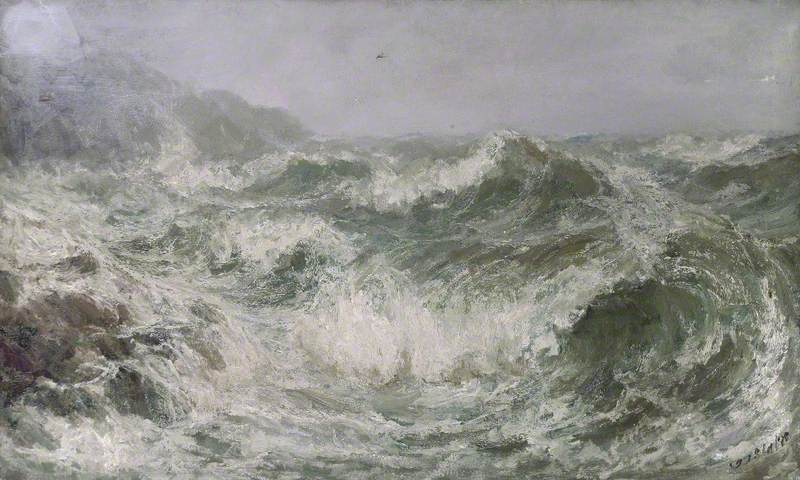
Our lives will have consolation moments and desolation moments. We fortify ourselves in the moments of consolations for the moments when desolations hit us.
When we are offered loaves and fishes, we can be grateful for the miracle we’ve experienced. But we can’t expect them every day, nor should we. When God provides for us, we accept in gratitude, in relief, sometimes with tears; but it is up to us to stand once the gift has been received, walk on, and find strength to return to our lives.
When we dwell in the desolation of our experiences, we risk springing the trap of Old Scratch–specifically, dwelling in our desolation prevents us from using the gifts and talents we have to serve God, our community, and to work in fulfilling our lives.



 the hermit gardener