A Measure of “Equality”

A person says, “I treat everyone equally.” They’re trying to convey that they don’t hold prejudices or make judgements about others. They’re trying to say that they don’t discriminate.

We may even hold this as a tenant of our own personal philosophy.

But do we all treat everyone “equally”? How, for example, do we define what equality is? What is the bar that we use to judge equality?

Take for example the province’s rehabilitation program for drugs and alcohol. Individuals from Regina must call and get into a wait list for a spot in a rehab in Moose Jaw. They must call daily to keep their spot and check in. Once their spot is open, they need to get to Moose Jaw to participate in the program.

If I were an employed individual with a vehicle, three square meals, and access to a telephone this would not be as much of a challenge as if I were an individual who was daily trying to think about where I was going to sleep without freezing to death.

The bar for equal in this situation is not just. It treats everyone equal provided they are able to reach a standard of equality defined by rigid fixed criteria that makes it harder, if not impossible, for an entire group of people with legitimate needs to be “equal”.

When we say we treat everyone “equally”, it is important that we examine what we’re really trying to say. Are we actually treating everyone equally, or are we saying that we will treat someone respectfully provided they meet a standard we may unjustly refer to as “equal”? Does our equality consider the diversity of circumstance, and that some people may have to work over and above what others may to achieve equality?

Saint Francis, recognizing that this practice was not only unjust, but a barrier between him and his full experience of God, did something radically different. He moved himself to the place where the most lowly, the lepers, existed. He made himself equal with the most vulnerable, the untouchables, and served them as if he were less than they were. Christ in the sacraments of the church makes it possible for us to meet the Divine on the same footing; they provide an avenue for us to meet Christ, acknowledge God’s presence within us, within all things, all people.

God’s calculus for equality puts us all on the same starting point. We, in our ego, move ourselves forwards or backwards, sometimes without considering that we may be moving ourselves closer or further away from God’s presence.

A Measure of “Equality”

Liturgy and the Liturgical Year

During the last RCIA meeting, the question came up about the real presence in the Eucharist: is this really Jesus, or is it just a cracker and some wine/grape juice?

As Catholics, we believe that when the priest consecrates, at that exact moment, something changes the bread and wine into the Body and Blood of Jesus Christ. He is present in that physical substance–His IS that Physical Substance.

Jesus is also present in worship, in liturgy. When we take part in any of the rituals of our church, Jesus is there. He tells us that when two or more gather in His name, He is present.

He is also present in the moments of solitude when we pray.

This morning, I woke with trouble on my mind. Like the body of water the disciples were on, my mind raced like the boat that bounced up and down.

I prayed. I asked Jesus for help. In that moment, the voice that came back said not to worry, that He’d been helping for quite some time now and would continue to do so.

When we make the leap to move to the bow of the boat, wake Jesus, and ask Him to help, He will.

As we enter the first days of Advent, we have the renewed opportunity to connect with the stillness our faith can provide. Each day gives us the chance to move to the front of the boat, to connect with Jesus, wake Him from His slumber, embrace, quietly whisper, and listen. While the world shakes and drops underneath us from all four corners, take time this Advent to be still, to consider the Nativity, to find peace.

Liturgy and the Liturgical Year

Presence, Grace, Connection

There have been times when I’ve felt God’s presence; at the words of consecration, He is there, sometimes loudly and lovingly, sometimes softly and nurturing, sometimes touching my pain, my grief, my sorrow, my frustration, my unworthiness.

Other times, I’ve felt the presence of God by His seeming absence from my life.

I experienced a very long dark night in which my grief was overwhelming. My cup runneth over with tears that I had no easy explanation for. Those around me simply did the best they could to compensate for my inability to function, and were unable to understand what was going on. I was so full of this darkness that I wasn’t able to react to what was going on around me except with tears, grief, pain, sorrow.

I reached for explanations beyond medicine because part of the philosophy of those I was running with was that medication was a sign of weakness, and we needed to be stronger than that. There was an expectation of needing to measure up, to “man up”, that I was very much aware of being unable to meet.

Looking back with clarity now, I know there were two components to what was happening to me–there was the very much medical imbalance of chemistry in my brain that was creating a recurring loop of sorts. There was also the diabolical component. When there is a weakness present, it makes it easier for those that want to take advantage to do so. The diabolical prefers to allow an individual to do the work on their own behalf, to feed on what is provided, and to stir the coals to keep the fire burning. In my case, this was what I call the three year dark night, although it may have been a longer or shorter time.

Looking back in clarity now, Jesus was beside me the entire time I was there. I was simply so focused on what was going on that I wasn’t able to see that the darkness of my life was allowed to go so far and no further. I loathed the idea of suicide and became even more deeply entrenched in my grief because of that. That was the bar that Christ lowered.

Why did I go through that dark night? What purpose could that pain have served?

The first thing it did was to lay the foundation for me to pursue my vocation. Had I not been in the deepness of that dark night I would not have come out the way I had. In many ways, the people around me didn’t believe for years that it was over–that may have been their own darkness no longer having a way to relate. I remember the almost frustrated way that people saw my sudden impulse to laughter, that wellspring of joy that simply couldn’t be released or sometimes controlled. They would ask, “Why are you laughing?” and I would respond “Would you rather I be crying?” I felt life again.

This was the presence of Grace in my life. I’d been shown a taste of hell, then very quickly lifted from it. Doors began to open, and when I walked through them, I was met with resentment from the people I ran with. “Why is he going to university? What does he think he can achieve?” “Who would ever consider hiring you?”

It didn’t matter. There was no resentment because I was free.

Keeping the connection with Christ was easy in the beginning because it was so pure, so present. I took steps to fulfill my vocation, doors opened for people who were supportive and showed me love. More, I was given a means to recognize trauma I’d experienced. It’s still taking time to work through, to heal. I’m still triggered by events in my life–moments that, in the past I would be punished for, or would push through in fear of the punishment are now met with empathy, compassion, and affirmation.

Prayer is the means by which we maintain the connection with the Divine. This takes the form of the formal prayers like the Mass, the rosary, reading with a mind to the Divine, cultivating silence and listening. Soon snow will be falling around us. When it does, and it’s falling softly and gently, go outside and listen. Things seem muffled. There’s a stillness even in the presence of the noises of the city. That’s what prayer is like, what prayer is meant to do. It’s the finding of stillness in the presence of the noise of the world. It’s not meant to remove the noise, but rather to exist along side the noise without dwelling in it.

That stillness is achieved in many ways. The simplest is quiet, repetitive prayer. Choose a short prayer, a simple prayer. Close your eyes and simple repeat the prayer in your mind, over and over. Do this for a short period to being, maybe 5-10 minutes. As the prayer becomes part of your inner dialogue, practice walking through the day repeating the prayer. In time, this becomes part of who you are. You will go to sleep in the prayer, stirring in the middle of the night with the prayer in your thoughts, waking with the prayer before you. Make the prayer a part of your being by repeating it constantly and consistently.

Lord Jesus Christ, Son of God, have mercy on me, a sinner.

My Jesus, mercy.

Hail Mary, full of grace, the Lord is with thee. Blessed art thou amongst women, and blessed is the fruit of thy womb, Jesus. Holy Mary, mother of God, pray for us sinners, now and at the hour of our death.

Hide me in Your Wounds.

Presence, Grace, Connection

26 & 27.

At that time, Jesus, passing by, saw a man blind from birth. And His disciples asked Him, Rabbi, who has sinned, this man or his parents, that he should be born blind? Jesus answered, Neither has this man sinned, nor his parents, but the works of God were to be made manifest in him. I must do the works of Him Who sent Me while it is day; night is coming, when no one can work. As long as I am in the world I am the light of the world. When He had said these things, He spat on the ground and made clay with the spittle, and spread the clay over his eyes, and said to him, Go, wash in the pool of Siloe – which is interpreted ‘Sent’. – So he went away, and washed, and returned seeing. The neighbors therefore and they who were wont to see him before as a beggar, began saying, Is not this he who used to sit and beg? Some said, It is he. But others said, By no means, he only resembles him. Yet the man declared, I am he. They therefore said to him, How were your eyes opened? He answered, The man who is called Jesus made clay and anointed my eyes, and said to me, ‘Go to the pool of Siloe and wash.’ And I went and washed, and I see. And they said to him, Where is He? He said, I do not know. They took him who had been blind to the Pharisees. Now it was a Sabbath on which Jesus made the clay and opened his eyes. Again, therefore, the Pharisees asked him how he received his sight. But he said to them, He put clay upon my eyes, and I washed, and I see. Therefore some of the Pharisees said, This man is not from God, for He does not keep the Sabbath. But others said, How can a man who is a sinner work these signs? And there was a division among them. Again therefore they said to the blind man, What you say of Him Who opened your eyes? But he said, He is a prophet. The Jews therefore did not believe of him that he had been blind and had got his sight, until they called the parents of the one who had gained his sight, and questioned them, saying, Is this your son, of whom you say that he was born blind? How then does he now see? His parents answered them and said, We know that this is our son, and that he was born blind; but how he now sees we do not know, or who opened his eyes we ourselves do not know. Ask him; he is of age, let him speak for himself. These things his parents said because they feared the Jews. For already the Jews had agreed that if anyone were to confess Him to be the Christ, he should be put out of the synagogue. This is why his parents said, He is of age; question him. They therefore called a second time the man who had been blind, and said to him, Give glory to God! We ourselves know that this man is a sinner. He therefore said, Whether He is a sinner, I do not know. One thing I do know, that whereas I was blind, now I see. They therefore said to him, What did He do to you? How did He open your eyes? He answered them, I have told you already, and you have heard. Why would you hear again? Would you also become His disciples? They heaped abuse on him therefore, and said, You are His disciple, but we are disciples of Moses. We know that God spoke to Moses; but as for this man, we do not know where He is from. In answer the man said to them, Why, herein is the marvel, that you do not know where He is from, and yet He opened my eyes. Now we know that God does not hear sinners; but if anyone is a worshipper of God, and does His will, him He hears. Not from the beginning of the world has it been heard that anyone opened the eyes of a man born blind. If this man were not from God, He could do nothing. They answered and said to him, You were altogether born in sins, and do you teach us? And they turned him out. Jesus heard that they had cast him out, and when He had found him, said to him, Do you believe in the Son of God? He answered and said, Who is He, Lord, that I may believe in Him? And Jesus said to him, You have both seen Him, and He it is Who speaks with you. And he said, I believe, Lord.  And falling down, he worshipped Him.

John 9:1-38

The passion is hinted here, like faint wisps fragrance.

Why is Jesus a threat to those invested in the old ways?

Why is the question who sinned, the blind man or his parents?

Why is blindness associated with sin?

The blind man is turned away by the priests. These are the carriers of the old law and tradition.

When we become transformed, those around us may question because they fear what they do not understand, or the transformation may in some way rock the boat.

We may be called and be afraid of that transformation we witness.

We are walking closer and closer to the Passion now. In your days, be mindful of small blessings.

Be mindful of small moments when you are frustrated, or tired, or angry, or upset.

Bring them forward in the examine at the end of your day, and ask for forgiveness.

Allow God to show you moments where Love is needed, needs to be present.

26 & 27.

21, 22, 23, 24, 25.

At that time, Jesus went away to the other side of the sea of Galilee, which is that of Tiberias. And there followed Him a great crowd, because they witnessed the signs He worked on those who were sick. Jesus therefore went up the mountain, and sat there with His disciples. Now the Passover, the feast of the Jews, was near. When, therefore, Jesus had lifted up His eyes and seen that a very great crowd had come to Him, He said to Philip, Whence shall we buy bread that these may eat? But He said this to try him, for He Himself knew what He would do. Philip answered Him, Two hundred denarii worth of bread is not enough for them, that each one may receive a little. One of His disciples, Andrew, the brother of Simon Peter, said to Him, There is a young boy here who has five barley loaves and two fishes; but what are these among so many? Jesus then said, Make the people recline. Now there was much grass in the place. The men therefore reclined, in number about five thousand. Jesus then took the loaves, and when He had given thanks, distributed them to those reclining; and likewise the fishes, as much as they wished. But when they were filled, He said to His disciples, Gather the fragments that are left over, lest they be wasted. They therefore gathered them up; and they filled twelve baskets with the fragments of the five barley loaves left over by those who had eaten. When the people, therefore, had seen the sign which Jesus had worked, they said, This is indeed the Prophet Who is to come into the world. So when Jesus perceived that they would come to take Him by force and make Him king He fled again to the mountain, Himself alone.

John 6:1-15

In the Catholic life, we are often tempted to fall into the trap of thinking that if we pray hard enough, if we complete the works of goodness or sacrifice enough, we won’t have to encounter bad things in our lives.

Or, alternatively, bad things happen and we cry out, “Why God, if you are infinitely good, do bad things happen to me?”

As Catholics, as Christians, we can’t expect that our lives will be easy and not include moments where we come face to face with Crosses. Or, as one of my favorite people, the Venerable Archbishop Fulton Sheen was fond of saying, there is no Easter Sunday without first a Good Friday.

Our lives will have consolation moments and desolation moments. We fortify ourselves in the moments of consolations for the moments when desolations hit us.

When we are offered loaves and fishes, we can be grateful for the miracle we’ve experienced. But we can’t expect them every day, nor should we. When God provides for us, we accept in gratitude, in relief, sometimes with tears; but it is up to us to stand once the gift has been received, walk on, and find strength to return to our lives.

When we dwell in the desolation of our experiences, we risk springing the trap of Old Scratch–specifically, dwelling in our desolation prevents us from using the gifts and talents we have to serve God, our community, and to work in fulfilling our lives.

21, 22, 23, 24, 25.

19 & 20.

At that time, Jesus said to His disciples: If your brother sin against you, go and show him his fault, between you and him alone. If he listen to you, you have won your brother. But if he do not listen to you, take with you one or two more so that on the word of two or three witnesses every word may be confirmed. And if he refuse to hear them, appeal to the Church, but if he refuse to hear even the Church, let him be to you as the heathen and the publican. Amen I say to you, whatever you bind on earth shall be bound also in heaven; and whatever you loose on earth shall be loosed also in heaven. I say to you further, that if two of you shall agree on earth about anything at all for which they ask, it shall be done for them by My Father in heaven. For where two or three are gathered together for My sake, there am I in the midst of them. Then Peter came up to Him and said, Lord, how often shall my brother sin against me, and I forgive him? Up to seven times? Jesus said to him, I do not say to you seven times, but seventy times seven.

Matthew 18:15-22

Consider here that we ourselves are a sibling to ourselves. When the truth of a thing comes to light, we must own it if we have a part in it, ask for forgiveness when and where it is appropriate, and accept the outcome. In the thinking of the twelve steps, this would be done “except when to do so would injure them or others.”

Whatever we bind on earth is bound in heaven. If we are bound by prejudice, anger, trauma, we cannot expect to easily go into prayer and find peace because we bring these things with us. How do we let these things go?

Slowly, over time, with consistency. If we notice a behavior that is detrimental to our well being, we recognize it, we look for the root of it, and we work to resolve it; writing, speaking to someone (a friend, a therapist), these are all good tools in helping to not just bring these things to the surface, but work to allow them minimal negative influence in our lives.

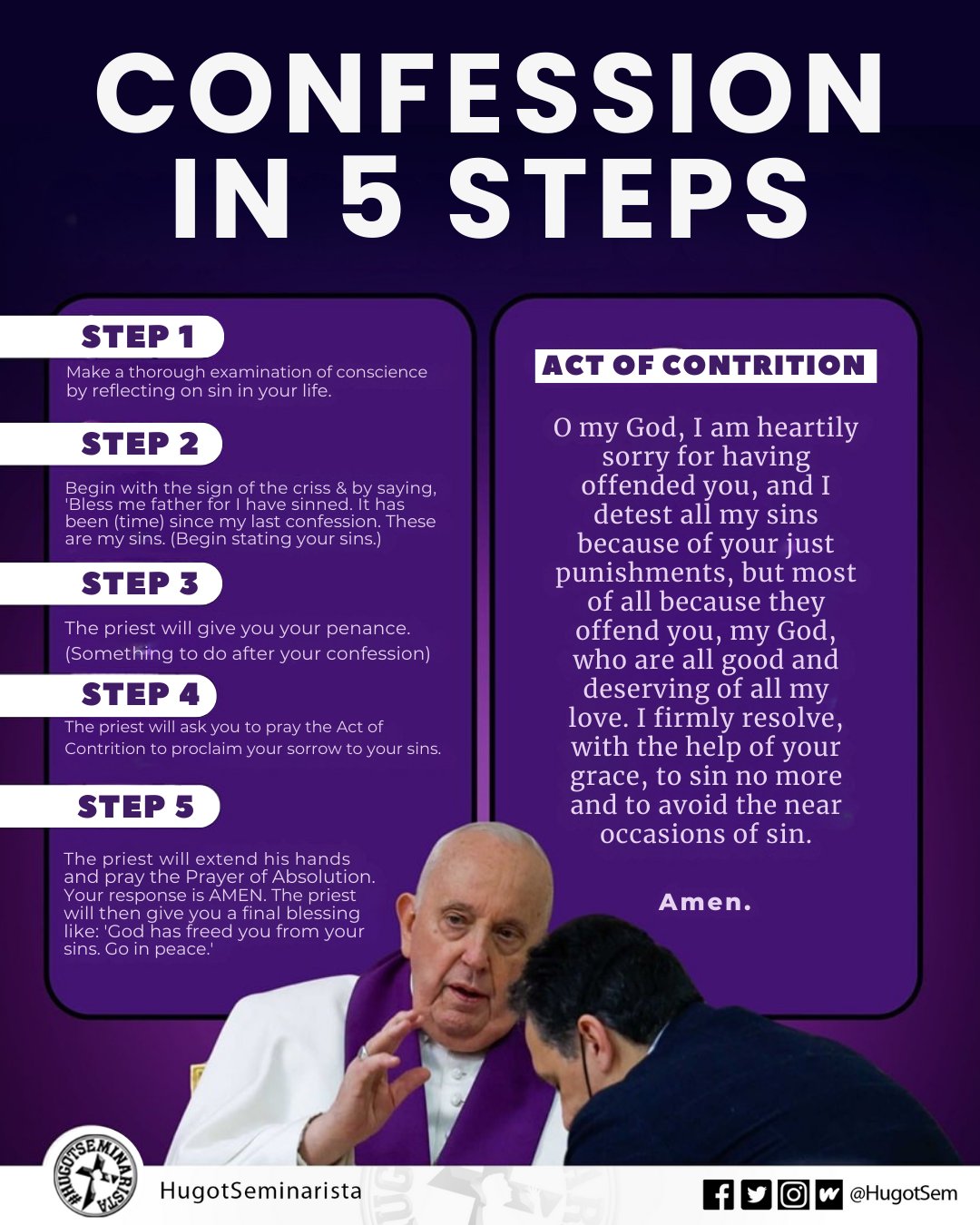
I’ve been talking to our worship community a lot about the benefits of confession. Truly, this is one way that we can release the hold that trauma and it’s cohorts has on us. What does it look like?

I described confession as being a conversation aimed towards addressing those things which have kept us from a closer encounter with God, with Jesus Christ. In a confession, we speak of those things we may have kept hidden from the world, trusting that what is said is kept in a sacred bond between the confessor and the one confessing. It can be a literal naming of sins, and a reconciliation, but it can and should be more than that.

19 & 20.

9. 10. 11.

At that time, Jesus took Peter, James and his brother John, and led them up a high mountain by themselves, and was transfigured before them. And His face shone as the sun, and His garments became white as snow. And behold, there appeared to them Moses and Elias talking together with Him. Then Peter addressed Jesus, saying, Lord, it is good for us to be here. If You will, let us set up three tents here, one for You, one for Moses, and one for Elias. As he was still speaking, behold, a bright cloud overshadowed them, and behold, a voice out of the cloud said, This is My beloved Son, in Whom I am well pleased; hear Him. And on hearing it the disciples fell on their faces and were exceedingly afraid. And Jesus came near and touched them, and said to them, Arise, and do not be afraid. But lifting up their eyes, they saw no one but Jesus only. And as they were coming down from the mountain, Jesus cautioned them, saying, Tell the vision to no one, till the Son of Man has risen from the dead.

Matthew 17:1-9

What causes a person upon hearing a sound to fall to their knees, when in seeing someone they knew as their teacher transformed before them, glowing brightly, even blindingly?

Many times in the Mass, especially those over the past few days, and those upcoming over Holy Week, we are called to kneel. Our churches typically have kneeling boards on hinges that we can pull down to make it easier to kneel and stand. The congregation I serve, while not having kneeling boards, does have cushions available in the chapel that we use; I looked this week at an image of what the cathedral in Regina used to look like pre-Vatican II. I was shocked to see how stark the sanctuary looks now compared to how it looked before it’s “restoration”–murals were painted over rather than restored, decorative scrolling throughout the sanctuary is now stark cream. Where the high altar once stood is now a void with empty floor, a large clay artwork of the 5 new mysteries of the rosary presented by St. John Paul II takes its place, yet the void between the wooden altar and the space the high altar once occupied is void. It feels like something significant is missing.

I grew up in the United Church of Canada in small town Saskatchewan. Kneeling for prayer wasn’t something I was taught, or a practice that I was even familiar with. I prayed when I laid under my blankets at night, or with the rest of the congregation in church lead by the minister, while the minister’s wife played a quiet background electric organ that became louder and finished right after the “amen”.

While kneeling is not always something we have the opportunity or the ability (it can be so, so painful for me!), we can draw to mind why it is why kneel. We lower ourselves to someone who needs aid, we lower ourselves out of respect, love, devotion. Kneeling, or adopting a position of submission, can, potentially, be part of our deeper practice of prayer–we yield to God, we yield to Christ and His teachings, we yield to moments like the Transfiguration that link Jesus to something more of Heaven than of earth.

9. 10. 11.

4.

At that time: When it was late, there was a ship in the middle of the sea, and Jesus was alone on land. And seeing his disciples laboring in rowing – for the wind was contrary to them – and about the fourth watch of the night he came to them walking on the sea: and he wished to pass them. But when they saw him walking on the sea, they thought it was a ghost, and cried out. For all saw him, and were troubled. And immediately he spoke with them and said to them: Trust, it is I, do not be afraid. And he went up to them in the ship, and the wind ceased. And they were more and more amazed within themselves: for they did not understand about the loaves: for their hearts were blinded. And when they had crossed over, they came to the land of Gennesaret, and applied themselves. And when they had come out of the ship, they immediately recognized him: and having traversed that whole region, they began to carry on litters those who were ill, wherever they heard that he was. And wherever he entered, into villages or towns or cities, they laid the sick in the streets, and begged him that they might even touch the hem of his garment: and as many as touched him were saved.

Mark 6:47-56

Mom tells you to go downstairs to the pantry and get a can of green beans. You go downstairs, confident at how easy this task in fact is. You get downstairs, and suddenly the beans are nowhere to be found. You are looking over what feels like a sea of cans. There is literally everything there except what your mom needs. You return to her, somewhat frustrated, and tell her you can’t find them and they must not be there. She frowns, you both go down to the pantry together, and without hesitation she reaches out and pulls the can of green beans that she needs.

It was there right in front of you and you couldn’t see it.

What makes our heart blind to see what is right in front of our eyes?

It might be that we lack faith in our own experience to know our answers are either factual, or slant to give us something more in line with what we want, or what is more comfortable to us.

It might be that we want someone else to confirm our experience. After all, life is much simpler if someone else is at the helm sometimes.

Or, in the case of our prayer, it may be that we are expecting certain experiences: perhaps we expect a sense of calm, the same routine, or even boredom from what feels like the same words, movements, over and over.

When the disciples “applied themselves”, they recognized Christ. When we apply ourselves in prayer, we recognize that the method itself may be repetitive, may be routine, but the experience will always be different, even if just a bit. There may be days when the water is calm: we enter into prayer, we embrace the experience and what occurs in those moments. Or there may be days when the water is turbulent, our hearts aren’t into it, we can’t come before the Lord or we choose not to. Or we do, and it isn’t until Jesus comes to us.

In any case, applying ourselves means being consistent as possible in the discipline of prayer throughout our day. It also gives us the grace to accept that sometimes, in our most frustrating moments, we need to ask for clarity in the storm: while we may find ourselves straying from our commitments in prayer, always return again, and again if need be.

4.

2.


At that time, when Jesus had entered Capharnaum, there came to Him a centurion, who entreated Him, saying, Lord, my servant is lying sick in the house, paralyzed, and is grievously afflicted. Jesus said to him, I will come and cure him. But in answer the centurion said, Lord, I am not worthy that You should come under my roof; but only say the word, and my servant will be healed. For I too am a man subject to authority, and have soldiers subject to me; and I say to one, ‘Go,’ and he goes; and to another, ‘Come,’ and he comes; and to my servant, ‘Do this,’ and he does it. And when Jesus heard this, He marveled, and said to those who were following Him, Amen I say to you, I have not found such great faith in Israel. And I tell you that many will come from the east and from the west, and will feast with Abraham and Isaac and Jacob in the kingdom of heaven, but the children of the kingdom will be put forth into the darkness outside; there will be the weeping, and the gnashing of teeth. Then Jesus said to the centurion, Go your way; as you have believed, so be it done to you. And the servant was healed in that hour.

Matthew 8:5-13

From “Homosexuality in the Bible: The Centurion’s Servant” by Isabelle Green.

Many scholars have highlighted the connotation of the Greek noun pais, which the centurion uses to describe his ill servant. It has a number of different meanings, such as ‘boy’ or ‘slave’. When referring to a ‘slave’ in the analogy he presents to Jesus, however, the centurion uses the standard Greek doulos, supporting the critical interpretation that his pais is no ordinary servant. Scholars have likewise suggested that it would be unlikely for a centurion to go to such lengths for a normal member of his household staff, and therefore their relationship must have been something more than that of master and servant.

One theory is that the pais was not the centurion’s servant or slave, but his ‘son’. However, a law introduced by the Emperor Augustus in 13 BC, which banned soldiers below the rank of officer from marrying, undermines this interpretation: although soldiers would father children outside of marriage, it was unlikely that he would have had an illegitimate son living in his home. Instead, many have suggested a reading of the pais as his male lover, due to literary evidence of homosexuality in the Roman military. Moreover, pais was sometimes used in Ancient Greek texts as a label for the younger partner of a same-sex relationship, alongside expressions of love or desire. In the Luke version of the passage, the centurion labels his servant entimos, which can mean ‘honoured’ or ‘cared for’, but may also signify emotional closeness in a romantic partnership.

The scholars Theodore W. Jennings and Tat-Siong Benny Liew have suggested that the dynamic between the centurion and his pais was more of a patron-client relationship; in this case, the centurion takes on the role of an influential patron, while his lover is a younger, less powerful man who relies on him like a client. This theory may provide an answer to a puzzling element of the story: why did the centurion not want Jesus to enter his household, despite asking for his help? Jennings and Liew explain that although the centurion is desperate in his appeal, he also fears that Jesus will come to his home in a position of authority and replace him in the role of saviour and patron to the pais. Again, the relationship lends itself to an interpretation of sexual power.

If we accept the theory that the connection of the centurion and his servant is homoerotic, then Jesus’ amazement at the centurion’s faith becomes highly significant in the discussion of religion and sexuality. Rather than recommending the death sentence that is prescribed for male homosexuality in Leviticus 20, Jesus praises the man’s faith, telling the crowd that he has never seen anything like it, and heals the pais. Far from condemning homosexuality, Jesus might be endorsing it. This reading of the centurion and his servant completely subverts the hetero-centric framework of love and relationships in the Bible, and therefore ought to be central to the discussion.

2.

Fat Tuesday

Yesterday, I read an internet meme that pictured the Blessed Mother as having had intimate relations with a shepherd, claimed it as a virgin birth, and started a religion. The meme was put out by a satanist. When I looked on their active tiktok profile, what I saw was a stream of memes taking pot shots at all religious faiths. 

They were all designed to provoke, defend, argue.

The myth of our age is: when challenged we have to engage, regardless of the costs; that in every situation there is a need to react, mostly without giving thought to consequence. I’m just as guilty as the rest. 

The day before the commencement of Lent is often given to excess, the focus being on the “what” we’re giving up rather than the “why”. This got me thinking about the reasons for this.

Christianity can be a faith of consumption, or it can be a faith of production, or it can be a faith which steps out of the need to consume, to produce, but it was never meant to be a faith that rests in consuming (be it the Sacraments or the need for approval or the need to be safe or the need to hidden or the need to avoid persecution) or producing (faith, safety, a need to be hidden, a need to avoid persecution, a need for power). Christianity is a faith that is meant to transcend these things and rest in the Infinite Possibility of a Being which knows us, which created us, which loves us, Infinitely. 

Those who would engage in argument or provocation for the sake of argument or provocation are operating lower than what we as human beings have the potential to operate as. I’m calling out politicians on all sides of the spectrum of left and right, religious leaders, activists, road ragers (including myself), and anyone else who provokes for the power without considering the consequences (including myself!)

Our faith calls us to consider that, Love steps above the human need to be right, or the shame of being wrong. It calls us to be challenges by beliefs we may hold as canonical that in fact are holding us back from knowing deeper considerations of living. It calls on us to love in the light of this, in the light that the love may be seen as a provocation. It calls on us to be silent, to dis-engage with the mundane and engage with the Divine. When Jesus talked about going into our room, locking the door, and praying to the Father, I think this is what He meant. Leaving behind the world, closing our eyes, mentally praying through memorized prayers, conversational prayer (where we speak, and listen), and then recognizing in the stillness the presence of Love greater than all that is outside the door we have closed to be in our solitude. This is the Franciscan method of contemplative prayer, and I invite you to engage with it during Lent:

Each day I’ll attempt to write on one of the readings of the day. Take up your Bible, in a place of stillness and calm, read quietly. Then, see the image of the reading in your mind, find yourself as a person that is part of it (either observing or actively taking part); let the scene play out. When your mind drifts, slowly re-envision the scene in your mind. As you do this, you will find yourself in a place of quiet where your inner chatter continues but you are drawn to the stillness and the chatter is more of a din in the background. Rest in this place, knowing this is the presence of God, for a few moments. If you wish, mentally pray, converse, but attempt to remain in the stillness and really listen. You may not hear anything, or feel anything: that’s ok. After a few moments in the stillness, return to the space you are in by opening your eyes. Breathe slowly. Journal about your experience if you’re called to do so. Set a timer for 15 minutes to begin with, slowly increasing the time you engage.

While tomorrow is the first day of Lent, the season has been upon us now for several weeks. We have been in preparation for the journey we begin tomorrow when we open the door, step out, and being to move closer to the greatest liturgical celebration of our faith.

Fat Tuesday