Love of (self)

“In order to understand the virtue of Love of Self, we must first understand that without God we are nothing!”                                                                                                                                                                                             -Franciscan Virtues Throughout the Year, p.83

As challenging as it is, sometimes I have to look carefully and in (an attempt to be) detached view of who I am and what it is that I’m doing.

Sometimes it means recognizing that the behaviors we engage in to protect ourselves end up pushing the people we love further away from us, or keep us from being authentic.  In many ways, these are literally first world problems because other people are fighting desperately to just keep a roof over their heads.

Case in point is our mission in Cameroon.  Right now, the mission is recovering from a very bizarre twist of having the church, orphanage, and living quarters demolished to make way for a public road.  Now, Msgr. Joseph is literally scrambling to try and keep a roof over his head.

I’m hurt because while I’d like to be able to help financially, if I put out any more than what I currently am, my own home and family will suffer.  I can do prayerful things like ask that more Masses be read on Cameroon’s behalf, I can fast on behalf of the mission, but at some point love of self requires that preservation come over charity.

I struggle with this as a Franciscan.  The Franciscan philosophy is to give all until the point of nothing left to give that we might be able to better engage Christ in others, and in ourselves.  But even Francis had to allow himself some comforts, even if that comfort was a stone floor to sleep on, a cave to pray in, or a tunic to cover his body.

Love of self, in terms of vocation, comes down to realizing that limiting our exposure to comfort can to a degree bring us closer to understanding and knowing God, but excessiveness can bring about a kind of pride that is dangerous.

Self Love is being able to act from the place in our hearts that is closest to God, closest to the danger places that we fear.  It is being able to ask those questions that we are most afraid of asking, holding onto the ideas of the answers being painful, even heart breaking, but asking the questions none-the-less because not asking, not entering into those places, is to resist knowing the will of God.  Love of self must be grounded in faith, in God, because love of self that rests anywhere else is selfishness that ends in darkness.


Love of (self)

Love of (God)

Yhwh.

The Hebrew name.
Breath in through the mouth, quietly, and listen.
Breathe out through the mouth, quietly, and listen.

From your first breath until your last, God is there.

How do I begin to explain what is so vast, so beyond my comprehension, and small enough to fit into my mind?

How do I begin to describe that which is reflected in the faces of the people I love most dearly, the people I’m closest to?

How can I try to begin to help you understand what brought me to wearing the browns?

Where do I begin to explain how this love, this infinite and powerful expression, has worked in my heart, in my mind, changed my eyes to see the world and the beauty and the suffering and the binary and the diversity?

Anger has no place anymore, and yet it works to push into the cracks and make the spaces wider.

Fear has no place anymore, and yet it works to unbind the mortar.

I go into that still place, the place where I trip over Latin words thousands of years in the making, signs of the cross that bring stillness deeper to my heart, brings the gaps closer together.  Beads in my pocket, copper and heavy, ringing with each step, reminding me of that stillness.

Quiet, the process of a Cistercian, an Englishman, into the cloud.  The unknowning.  The knowing and the dispersing of self, the emptying of fear and anger and all that is just as it should be with dollars and coins and bills and telephones

and

the filling of light

the smell of incense

the sound of chant in my throat

the hardness of stone on my knees

the taste of wheat and wine in my mouth

How do I begin to explain these movements, these words, these signs, these outward symbols  that seem so royal, so capital-driven, are markers to the outside that cannot see, the voice inside which cries out:

Agnus Dei, Agnus Dei, Agnus Dei, qui tollis peccata mundi, dona nobis pacem.

Breath in.

Breath out.


Love of (God)

Love of (enemy)

clover+

As a gardener, I was confronted a couple of years ago by the reality that the space I was using to grow vegetables was not going to perform as well as I had hoped, primarily because there are three large spruce trees at the back of the yard that start shading the entire yard about mid afternoon.  I did get some vegetables, but it didn’t produce well.  I started to transition the garden space into a perennial garden.

As much as it drives my neighbours crazy, I’ve let the yellow sweet clover take over.  There’s also other native plants including sages, daisies, and a couple of Russian thistles that are about to bloom (and yes, once the blooms are finished, I’m deadheading because nobody wants a yard full of thistles), and wild grasses that sway with the wind.  I’ve also seeded ancient grains that don’t seem to be coming up yet?  But the mustard is still blooming, and the day lilies and other perennials seem to be thriving in the space I’ve called the meadow.

I’ve also let the other flower beds and the raised vegetable garden to go a little more on the wild side, and yes it means that the vegetables don’t produce as prolific as they would’ve in a well weeded garden–but the over all effect is a wild, woodland, green space filled with all kinds of insects and birds.

These plants are providing a sweet aroma to my space, they move with the winds and the heat increases the scents.  I need to mow today just because the paths that I walk are starting to get a bit overgrown, and strangely enough the lawn parts of the back yard are drying out while the more naturalized parts of the yard seem to be thriving…although the next few days of heat wave will test that.

Before I went into my garden, I went into a thread on social media I was asked to reach out to and look into.  Apparently, the GSD housing that’s just been announced at the University of Regina has caused a lot of ruckus in the comments section, and a friend of mine had reached out to many of us to try and go in and bring the energy of the comments up to a little more positive space.

They weren’t kidding.  Ten seconds of just looking at the comments and I realized that the threads were literally filled with people who were trolling, people who were pushing a hegemonic agenda.

I closed the window.  What to do?  Do I confront it, do I just not get involved in it?  I realized from having taken part in a similar exercise last week that posting in a positive way, especially among a swarm of negative comments, often results in attacks and a huge energy drain.  My one interaction last week was exhausting!

In gardening, I have realized that sometimes making concessions results in beautiful results.  In the case of the meadow, I simply allowed plants which would’ve been categorized as weeds by most any other gardener to flourish.  The result is a space that, although unconventional, is pleasing and calming.  It’s the contemplative “cottage” garden that I was aiming to create and it required far less work to achieve, and far less maintenance to keep looking good.  Granted, most of my neighbours have commented on how I’ve let the weeds go.  But their perception is based on a convention of what is and what is not a weed.

During Pride, I held a retreat slash workshop called “Crossing the Road” in which I tried to get participants to see that the labels we use, the approaches we take to those labels, are designed to keep barriers between us because those barriers achieve a certain purpose.  It’s safer to keep an us versus them mentality.  Saint Francis took a plunge, tried to break through barriers because he knew they were a hindrance to living to the fullest.  Does this mean shaking off responsibility, does this mean not holding ourselves accountable for our actions?  Absolutely not.  What it does do is challenge us to question why it is we believe what we do about people, what those beliefs do to protect us, what ideas come about because of those beliefs that may or may not reflect truth about entire groups of people.  Not challenging the barriers between us as people helps to affirm that prejudices founded in fear are acceptable.  They’re necessary.

What no one seems to be willing to see is that on both sides of this, people are saying and doing the same things; only the names/identities of the individuals change.  The mechanism behind prejudice is exactly the same, and no one is the wiser to how ridiculous the entire situation is.

On the same token, I realized that some people aren’t interested in understanding a different point of view.  Some are simply excited, titillated, by trolling–poking the bear for poking the bear’s sake.  They’re best ignored because their entire purpose is not to challenge any idea, it’s simply to stir up a reaction for the sake of stirring up a reaction.  It’s childish, but more importantly, it’s a signal that someone requires understanding and compassion.  Which is difficult to do, because let’s face it!  These threads can create a massive amount of energy that most of us simply react to.

The challenge for us as Gender and Sexually Diverse people is to recognize that from our suffering, a suffering that many people either refuse to see or are unable to see, we are given a gift of empathy that is not only a privilege, but requires a certain level of responsibility.  We are challenged to be empathic to people who don’t see a struggle where we feel the struggle daily.

Not seeing something which is asserted to exist as a challenge to some is not proof that challenge does not exist.  Something that is not experienced as a challenge by one does not mean that challenge does not exist for others.  It requires patience, it requires that we treat every individual we meet with the dignity and respect we would ourselves expect, even and especially if that individual seems undeserving of that dignity and respect.  To do otherwise is to affirm that our differences keep us at opposite ends of a continuum that can never be crossed, or challenged.

Rather than enemy, Love of Neighbour.

The quote from the book today rings so solidly, and so true:

“All my brothers, let us pay attention to what the Lord says; love your enemies and do good to those who hate you for our Lord Jesus Christ, Whos footprints we must follow, called His betrayer a friend and willingly handed Himself to His executioners.

“Our friends, therefore, are all those who unjustly inflict upon us distress and anguish, shame and injury, sorrow and punishment, martyrdom and death.  We must love them greatly for we shall possess eternal life because of what they bring us.”

                                                                      -Earlier Rule, Chapter XXII

Love of (enemy)

Justice


justice
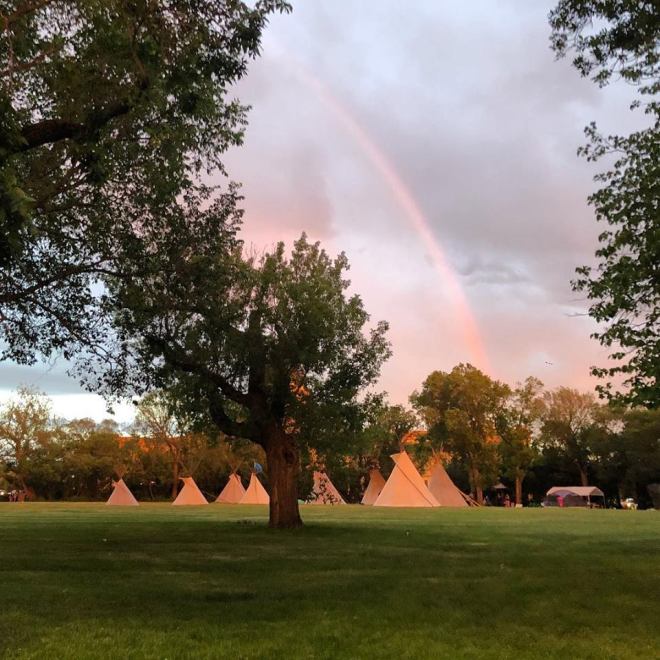
Camp:  Justice for Our Stolen Children, Wascana Park (Photo Credit:  Dan Shier)

This week’s virtue is timely given that in just a couple of days, the individuals who have been camped out at Wascana Park will be meeting with representatives of the Provincial Government.  For those of you who may not know, they individuals began camping here after the Gerald Stanley trial came back with a verdict of “not guilty”. This is a complex issue that would take pages to really explain, so I urge you begin your reading here.  I also urge you to continue to search and read articles on the case, the verdict, and the implications. On July 1, they will be holding a consultation to allow the community to provide them with issues to take to the table–while on the other hand, the government has asked at least three times for the police to remove the camp.

The police have refused.


I was approached on Facebook by someone who wanted to have a discussion about Gender and Sexually Diverse Rights and the struggle.  I was so wrapped up in the camp that I didn’t realize this was his initial reason for starting the conversation with me.  My bad.

This individual claimed to be in Christian ministry, and I can only assume that if they were, given the tone of their demeanor they were a member of a fundamentalist denomination.  Not judging, just making an assumption.  In his words,  “Justice is consequence for action.”

While I may agree that this definition might be a part of what justice is, I can’t help but think that justice itself is far more reaching than just consequences for action.

His argument was that the law says that you can’t camp in the park.  And while it may be uncomfortable, everyone has to follow the law.

But what is law, what is justice, if those consequences aren’t balanced with compassion?

The general energy of the comments I’ve been witnessing have been that we all have to be treated equally, and that means everyone has to act according to the law regardless of why and what they are doing.  But where do we acquire this idea of equality?  What is the bench mark for equality?   Equal from an Anglo-Saxon perspective?  For someone who may have grown up in adverse poverty, addiction, violence, depression, this isn’t equal.  This is a bar that is so high that they have to reach twice as far as someone who hasn’t experienced these issues.

Is justice fair if it’s based on a sense of equality that requires individuals to reach twice as far from where they have begun to be considered on the same level playing field as those of us who haven’t had to experience these issues?

The individual I mentioned earlier in this post said also that they abhorred using labels.  And while I find that this sentiment may be rooted in the right ideas, again I have to say:  if we remove labels, and identities, what is the general identity we’re attempting to achieve, and what happens when that identity (and I’m going to assume that general identity is one that comes from the safety of privilege) again requires individuals to work twice as hard for what I have?

I had to work 70 hour weeks at one point in my working career.  Not just for one week, but for a few years.  I understand what it means when people postulate “hard work to get ahead”.  What I have now is because of that, and in the scheme of things it’s not a lot.  When I consider how much more difficult that would’ve been had I not been a white male….  And that bothers a lot of us.  And that makes a lot of us white males feel marginalized, and isolated, and discriminated against.

The key to justice with compassion begins right there.  It begins with recognizing that feeling of being discriminated against is something we can use empathetically.  We need to multiply that feeling ten fold to get just a taste of what it’s like to be someone who lives with discrimination and marginalization and the yoke of “if you work hard enough you can achieve anything (you just have to work five times as hard)” feels on a daily basis.  It’s from that position that we have to use that feeling of being discriminated against not to be victims, but to help empower all people, to lower the line not because we need to give people hand outs and something for nothing, but because the comfort of where we exist comes at the price of other people being held in their suffering.

If the money that was used to purchase a pipeline recently had instead been used to renew or replace infrastructure and create healthy, clean drinking water on First Nations across the country, how much further would we be in terms of truth and reconciliation?

I know this makes a lot of people angry, and I understand where that anger comes from.  It’s from the place where I suspect most of us realize that when we hear someone say “welfare is a free hand out for someone who doesn’t want to work for a living, it’s a leech on our tax dollars”, our anger helps to cover the reality that most of the people who are on welfare have a bellow average if not sub-standard quality of life, a quality of life which our society not only has a hand in creating, but sustaining.

I’ve challenged the people I’ve heard speaking out against the camp to actually go down and listen to what the people there have to say.  Most of them hide behind the law argument.

As I’ve come to learn and to understand:  privilege requires no courage.

When justice under the law is based on an principle of equality that is measured by an impossible standard to achieve by all people, there is justice for no one.

“Let whoever has received the power of judging others pass judgment with mercy, as they should wish to receive mercy from the Lord.  For judgment will be without mercy for those who have not shown mercy.”                                                                                                                      -St. Francis of Assisi, “Second Version of the Letter to the Faithful”


*This is part of a series of a year long journey through the book, “Franciscan Virtues Through the Year“. If you’d like more information on Old/Independent Catholicism, or would like more information on my denomination, or feel called to a vocation, click here!

Justice

Joy

joy-with-white-background.jpg

It can be as simple as six unopened peonies in a group planting that should have yielded thirty or forty.  Winters are strange.  Peonies are joy.

It can be as wonderful as the first nose of lilac, and the first nose of deep purple lilac that is so much headier than the light blue ones in the back.

It is as amazing and overcoming as realizing he left the car open, windows down, no keys, but it’s ok because he’s on his way back…and three blocks down thirteenth avenue towards Albert Street from where it started, the back of the parade is slowly moving west while the front of the parade is just starting to pass behind you going south on Broad Street.

Or the smile on the face of a woman reunited with her child.

Or the still quiet golden light that fills the clover in the back yard, and the sound of bees of all shapes and sizes feasting.

It is the exhilaration of a tipi returning to where it once was, and the prospect of a beer garden being less important than the voices of our First Nations siblings, and the lives of all of our children.

It’s diner with friends, and the realization that in forgetting to pay, the realization of how exhausted you really are, a friend has your back and it’s not an issue.

Or being in the right place at the right time to find the ring of one of your biggest heroes.  Thank you Bunny.  I know you stepped on it?  But I was able to fix it.  It’s yours if you want it back, but for now, that rock is mine.

It’s the feeling of knowing your dog won’t be around as long as you’d hoped, but every day that she wakes you up with a smile and asking for a walk means it’s one more day with your fur baby.

It’s knowing that you are part of a community, part of a group of people who care about your welfare, who think about you often.

It’s the feeling I get when I dig into the soil the first time, every time.  It’s the feeling I get when I put on my habit, when I sit down with my breviary, when I light a candle before I go to bed.

The flavor of the first tomato, and watermelon, and Japanese mayonnaise.

A gentle touch while driving, a hand that just embraces a finger, for no reason.


Joy

Imitation of Jesus: An Open Letter to the GSD Community of Regina

7401acc3edb76c72d8f580cc3bbc197e

This has quite possibly been one of the most challenging couple of weeks in the Gender and Sexually Diverse community of Regina’s history.

For those of you that may not know, our local pride committee selected two grand marshals this year.  One was Aids Programs South Saskatchewan, the other was a football player from an NFL team who’s originally from Regina.  This football player was selected as having showed qualities consistent with what some might consider an ally to the GSD community.

Then tempers flared.

On one hand members of the community were happy that an ally with a big name and possible draw quality was selected.  On the other hand, members of our community were frustrated and angered by the idea of walking behind a cis-gender heterosexual person.   Last Wednesday, there was a town hall meeting where some members of the community gathered to voice their frustrations, pain, and opinions.

Where a lot of us felt like there was going to be shouting and yelling, what ended up happening was just about everyone was able to voice their opinions, express how they felt, and to do so in a way that was constructive, safe, and community-building.  A lot of things were said in the meeting that brought together diverse communities that exist within the greater community, something that has needed to happen for a long time.

A statement was released to the press (who were in fact hovering outside the meeting looking for a story, and when one wasn’t provided to them in the time frame they required, created one in the style of what I would consider tabloid journalism), the community once again reacted.  This time, words and phrases were bantered about that were not only divisive, but contained the kind of sting and anger that we as GDS people would only expect from the extreme right or fundamentalist Christendom.

The virtue this week is imitation of Jesus.  A lot of us within the GSD community have experience pain, trauma, and rejection from religious organisations through the years, so the idea of imitating the figure head of the organisation behind that suffering seems contrarian, seems indignant, seems frustrating at it’s best.  I’m not writing this blog post for those people.

This post is for the people who do walk that knife edge of being both queer and Christian, or in my case, queer and Catholic.  Part of the challenge we have to live is that we potentially face rejection and scorn from both our GDS community and our religious and/or spiritual community.  As much as this pushes many of us to practice in secret, or in ways that may compromise the strength of our faith, we are in fact called to preach the gospel at every opportunity–and to use words when necessary.  Rather than announce our faith verbally, the community has to come to know who we are by what we do, why we do it being secondary.

And that means emulating Our Lord when He said, “Forgive them, Father.  They know not what they do.”

It means forgiving people whom we would instead rather lash out at, lash out at with the support of community, for beliefs and actions that are contrary to the innate right to existence we as GSD people have (that in fact every human being is entitled to).  It means forgiveness of the most vicious, the most hurtful, the most painful–especially and even when these  comments come from people we considered to be allies or friends.

I have been made aware of shameful behaviour that has occurred in our community, committed by members of our own community towards other members.  There are groups who at this moment are watching, waiting for the opportunity to strike at our rights, waiting for the moments when we are most divided, and most in conflict with each other.  As my partner so prolifically quoted, “A house divided against itself will fall.”

If in the next few weeks we suffer setbacks at the hands of other individuals or organizations, we have no one to blame but ourselves:  not the press, not the right, not the fundamentalist.  Ourselves.  Our community has shown great promise and potential, but in the same light, has said things that cut to the core of who we are, what we are supposed to be, in ways that I can only conceive to be described as fascist.

When individuals behave in this kind of way to their own community, they turn their backs on where they came from. In effect, they turn their back on the people who had to work and to sacrifice so much for their rights.

To people who use words like terrorist to describe people with differing opinions in the GSD community of Regina, to people who confine people to what they can and cannot do within the GSD  community because of the limited opinions of their limited binary thinking:

You have turned your back on your roots, on your heritage, in exchange for the comfort of the illusion of righteous superiority.

When people in our own community revert to treating people of our community as second class citizens, they allow and give permission for the GSD community to once again fall into a condition of not being taken seriously, and for those of the extreme opinions to act against us confidently.

Wake up.  Wake up.  Wake up.

Pray.  Love.  Learn.  Be ok with being uncomfortable, be ok with recognizing anger and frustration at an opinion or an action as possibly being a trigger to recognize your own privilege.  It happens to me all the time, and it bothers me, and I’m grateful for it.

We must be like Jesus, but we have to be like Saint Francis of Assisi as well, and literally challenge ourselves to see our own faces in every human being that we encounter.  Especially the people we are most afraid to see our own reflections in.  Be that a football player, a reporter, a protester, someone struggling to find their identity, or someone who’s confidence in their identity possibly shakes our confidence in our own.


Imitation of Jesus: An Open Letter to the GSD Community of Regina

Humility (Pride)

(In which I speak about the choices for Grand Marshal this year, activism, and why anger kills any hope of change.)

Gay Pride

Many of us have a misunderstanding of what humility means, and especially during the month of June when we actively celebrate Queer culture-this is supposed to be the time of the year when we stand up and say it’s ok to be who we are, it’s ok to be open about who we are, recognizing the struggles from whence we came, the progress we as a society have made, the progress we as a community have made.

It’s also a time to take stock of what we have, what we need to address, and how we can move forward.

When I was very, very active in the Pride movement in my twenties, I remember a lot of different feelings.  I remember being challenged to be present and visual where I had once been absent and hidden, courageous in fearful situations, confronting aspects of society that would not allow us to be who we are because doing so creates a sense that the fabric of society, a fabric that is perhaps woven poorly to begin with, was coming apart.  I experienced a euphoria, a rush, a strength that was driven with anger, with pride, with comradery of people who felt as I did, people who looked up to us because of who we were and what we did.

Now, almost twenty years later, I find myself once again wanting to engage in the Pride movement, except I feel a lot older, and probably just a little more experienced.  I sat in on a training workshop this past Sunday where there were people in their early to mid teens getting ready to volunteer.  It blows my mind how young people are, how willing they are to get involved.  Things have changed a lot.

They’ve changed in that there’s new pronouns and ways of expressing sexual and gender identity.  Keeping up with everything is a sure way to stay humble, because where once I thought  I knew just about everything I thought there was to know, I now find myself having to relearn the paradigm.  It’s not a bad thing because it reminds me that even at forty six, I still have lots to learn.

What I find the most challenging to being humble is the way anger acts like a stone in my shoe.  Here’s a great scenario from the garden.  I go out to weed.  I know I have to weed because even leaving grasses and wild plants, you have to make room for the perennials to have nutrients and keep up.  So I start to pull.  And then I look out at the field of dandelions, quack grass, and I start to get angry with myself for letting it go so long.  I pull weeds a little slower.  I get more angry with myself.  I stop pulling weeds all together.

I have successfully talked myself out of pulling weeds because, in reality,  I didn’t want to pull weeds to begin with.

Anger is the greatest opponent to humility.  I have watched as people in the last two years that I have been aware of the comings and goings of the gender and sexually diverse community have acted out of anger, sometimes rage.  I don’t think that this anger or rage isn’t justified.  But I’ve watched as potentially great future leaders in our community have become crippled in the effectiveness of their activism because they allowed anger to dominate the motivation of their actions.

Humility is not a negative virtue.  Humility when balanced with pride allows people to see the full picture without getting so deeply involved.  It acts as a kind of buffer between the action and the reaction that usually gets a reacting.

Humility allows for people to be able to admit when they were wrong, and to be able to accept the consequences.  But it also allows those who have been injured to see that the one who was behind the injury is suffering themselves.  Humility is, I believe, the beginning of communities understanding how interconnected we are, how in reality defining the boundaries of community actually makes us more stagnant and limits our own potentials.  When we create a closed system, we further allow for greater fracturing within that system, until at last we are weak because we are no longer united

Great example here is the current grand marshal choices for this year’s parade.

On the one hand, (Aids Programs South Saskatchewan has been celebrated for the work they are doing in our community, yet the second choice Jon Ryan has created anger and  hurt in our community.  The voices say that a member of our own community should’ve been chosen over a cis-gender white male.

Which community?

We as a group of communities need to be very, very careful.  We are entering into a situation where we, as groups who have been oppressed or ignored for decades, can very easily become the individuals we were and have been fighting.   Where we were once calling for tolerance and tearing down walls, we are now in the very difficult position of potentially acting outside of tolerance, of building walls ourselves.

A healthy system is one that is diverse.  Diversity cannot exist without humility, the humility of accepting that walls and anger are symptoms of fear, that fear cannot create healthy change that lasts.  Queen City Pride and the Regina Police Service are co-operating so that officers can participate in the parade without wearing uniforms.

The problem has been band-aided.  Now what’s going to happen to help people deal with the causes of the fear?  Who’s going to sit both groups down, the police and the marginalized, so that people can speak and be heard?  Who’s going to take the step out of anger into humility to step into reconciliation  rather than walking away from the problems, justified by rage?

Anger is colonialism.  Changing the base of power isn’t solving the problem.  It’s colonialism.  Revolution is only effective when it totally casts off the system, not when it changes the figures in power.   It’s only effective when it is non-violent, when it is loving, when it encourages diversity.

Best line ever from “Rent”:  The opposite of war isn’t peace, it’s creation.”

Humility is the foundation of all the other virtues; hence, in the soul in which this virtue does not exist, there cannot be any other virtue except in mere appearance.
-St. Augustine of Hippo

*This is part of a series of a year long journey through the book, “Franciscan Virtues Through the Year“. If you’d like more information on Old/Independent Catholicism, or would like more information on my denomination, or feel called to a vocation, click here!

Humility (Pride)

Hope

1024px-The_Virgin_Mary_and_Jesus_-_Detail_2848027251-660x350

As a gardener, hope is something that I’m familiar with.  I think everyone who gardens (and those of us who don’t) who live in a climate where winters are harsh, sometimes longer than spring, summer, and fall combined, carry hope for the day when the first smell of green hits us.  As I’ve watched the tulips push up, the lilacs unfold like great lavender soft serve cones, I’m reminded that hope transcends the garden.

Two stories:

The first involves my own little dog, Sookie.  Two weeks ago, she was laying on my stomach; she wasn’t eating, and after three days was fading really fast.  The vet had told us to bring her back on Wednesday when we had taken her in for an emergency check on Saturday night, but looking at her literally fade in front of my eyes, I knew that if we didn’t take her in then (Tuesday) she wouldn’t be around on Wednesday.

They did blood work, and came back with a probable diagnosis of leukemia.  Her white and red blood cell count was almost non-existent.  Her kidneys and liver were in failure.  The prognosis wasn’t good.  Sitting there in the clinic, I said my goodbyes and told her that soon the pain would be over and she’d have endless fields to run through and rabbits to chase.

The vet came back and told us to try prednisone, a cost effective cancer treatment, and that it might give her weeks, months, possibly years (but most likely weeks).

I prayed.

I couldn’t go back for her second blood test a few days later because it was too emotional an experience to put myself through, so I sent my brother and my father.  Her red and white blood cells were right back to normal, were actually better than they should’ve been.  It’s almost like a miracle has happened–and I’m taking each day with Sookie as a blessing.  More walks, more scratches, more fetch.

In this situation, hope was under the wire for me.  I had faith that Sookie would be taken care of, I had horrible anguish dealing with the probability of loosing her so early in her life (she’s 7 going on 8 and is really just middle aged).  There was a glimmer of hope, and I held onto it, but kept everything in perspective.  The reality was Sookie probably didn’t have long.

Turns out I was wrong.

The next story came about just over the course of this past week-end while I was having a fire pit with my partner, Dan, and his brother Tai and sister Yumi.  We were talking about our pets and the problems, joys, and struggles we’ve experienced with them.  Tai told us about his two cats that came from an adoption agency in the Philippines.  Bear what a white cat with more than normal slanted eyes and a tenacious personality.  But, after a break up, he had to say goodbye to Bear (who’s full name was Barry White).

As I sat and listened, I opened up my photo files and showed him a picture of my aunt’s cat, Ziggy.  Ziggy was a white cat that came from the Philippines who had apparently belonged to a couple who realized they weren’t cat people anymore and wanted a dog instead.

We talked a bit about commonalities between the two cats and after a few minutes realized that Bear was in fact Ziggy.  I let my aunt know via WhatsApp and she was shocked, amazed, and delighted to know that Ziggy had a history.

Tai is planning on coming to see Ziggy/Bear in the next few weeks once my aunt and my mom get back from British Columbia.

In this case, hope that was frozen returned like a rain in a desert that no one suspects will see moisture.

Hope is a bookmark.  Hope is a pause, sometimes wrapped in reality, sometimes buttressed with fantasy.  Hope at it’s purest is nothing without faith, faith grounded in reality.  Faith can be lost and won in a moment, or it can be a steady quiet thread that runs through our every day.

It is the trust that even in the face of the greatest challenge, the most insurmountable odds, things can and do turn around.  It is the belief that miracles can and do happen–maybe not in the way a selfish, child-like need to own or to have our own way or things wants them to, but more along the lines of God moving in, around, and through our lives in ways that bring us to better places, through pain and suffering.

Hope

Honesty

It’s been a couple of weeks since my last entry;  my cousin passed from a heart attack, then my dog was diagnoses with leukaemia, then my dog was re-diagnosed after her blood tests came back more positive than they needed to be….compounded is the fact that this year, I had to resume chopping down the old lilacs on the north side of the yard–you get the picture.

Truth as Central Virtue

When I was a kid, I had this problem.  I had it in my mind that people wouldn’t like me for who I was because I came from a home where there was alcoholism, I had this attraction to people of the same gender, I was fat, all kinds of reasons for people to not like me.  So I spent a lot of effort creating stories about who I was, where I came from, because in my mind I thought people would like me more if I was just more interesting.

What I didn’t realize was that people knew me as that kid who never told the truth.

When my family moved from the town we were living in to the city I live now, I looked at it as an opportunity to start over.  So I resolved not to lie any more.

Then something happened.  I fell in love with my best friend, Cory.

I had spent the better part of my life trying to hide the fact that I was Queer.  I had done this even though just about every person around me knew it, and those class mates who felt the need to belittle or bully me would point it out.  I couldn’t tell anyone, and when I finally did get to the stage where I was able to admit to myself and the people around me, I’d realized that once again I was in that place where I had been lying.

Honesty is a difficult thing not because the truth is difficult.  Truth is never difficult.  What is challenging about honesty is that it forces us who embrace the truth as a virtue to admit that honesty pushes us into sometimes very uncomfortable positions and situations where we have to be vulnerable.  It means being prepared to admit that we have made mistakes, owning up for the damages those mistakes may have caused, and being willing to reconcile to make things right.

When we surrender to honesty, we grant ourselves the permission to go with the flow of the universe.   As difficult as it can sometimes be, the effort to engage the world in honesty provides us with a more harmonized existence.

Honesty gives us permission to fail, to learn from our mistakes, but to be diligent in how we approach ourselves in the context of our world, and our awareness.

Honesty