There are a couple of ways to make a confession.
If you’ve never made a confession before, or it’s been a long time since you’ve made a confession, you may want to consider taking some time, sitting down with paper and pen, and doing something similar to what is done in the fifth step of Alcoholics Anonymous.
“Make a fearless and moral inventory of ourselves.”
The first time I did this I wasn’t even 20 years old so there wasn’t much for me to really write about–given than I’m now almost 54 and when I look back there’s a lot more to the field than there was when I was 20!
A fearless and moral inventory requires courage. There may be things that we look back on that we don’t feel proud of. There may be things that, when we look at, we cringe thinking about how we behaved, or how we functioned.
Remember that the inventory that we’re creating isn’t meant to relive the experience. If you do feel badly about the experience, if you feel some shame or embarrassment about the experience, this is a pretty good indicator of a couple of things: firstly, you’ve changed as a person! You’re not the same person that you were, and the fact that you see the event in a different light shows that you’ve grown in your outlooks and values. Second, you have a choice now about what to do with those feelings you feel. You can try and forget what happened and move forward, or you can take the power that event currently has over you away. You do this by admitting to yourself that you’ve changed, that it might have been wrong even though at the time it felt right; you can admit to God that it was wrong, consciously. Talk to God in prayer, acknowledge that you’ve changed.
The hard part is admitting to another human being the nature of why you did what you did. But if you want that event to loose its power over you to make you cringe, to make you feel guilt, or shame–talking to another person, talking in the context of confession where you trust the person you are speaking to will 100% remove the power it has over you.
For this type of confession, it’s good to make an appointment with your priest, explaining what you’re needing to do, so you will have no issues of time.
The other type of confession is one that typically happens a lot faster. It’s one you make, having made regular confessions, where you simply need to explain in brief. It may only be one particular issue or anger. “I let anger get to me while driving again, and it affected me during my day in that I lost my temper.” In that situation, the confession may only take 5-10 minutes.
At the end of either type of confession, the priest will give you a penance. Typically, this is a series of prayers you need to say before the Blessed Sacrament, but can also include conversations about ways of overcoming challenges that lead to those behaviors you’re not feeling great about. “What can you do the next time you feel angry behind the wheel to help either reduce the time you’re angry, or make it so that it’s just a blip that you move on from almost right away?”
Here’s a graphic that has some good points about what to expect, and what you’ll need to know “liturgically” before you go. The priest will be able to help walk you through if it’s your first time, or if it’s been a while.
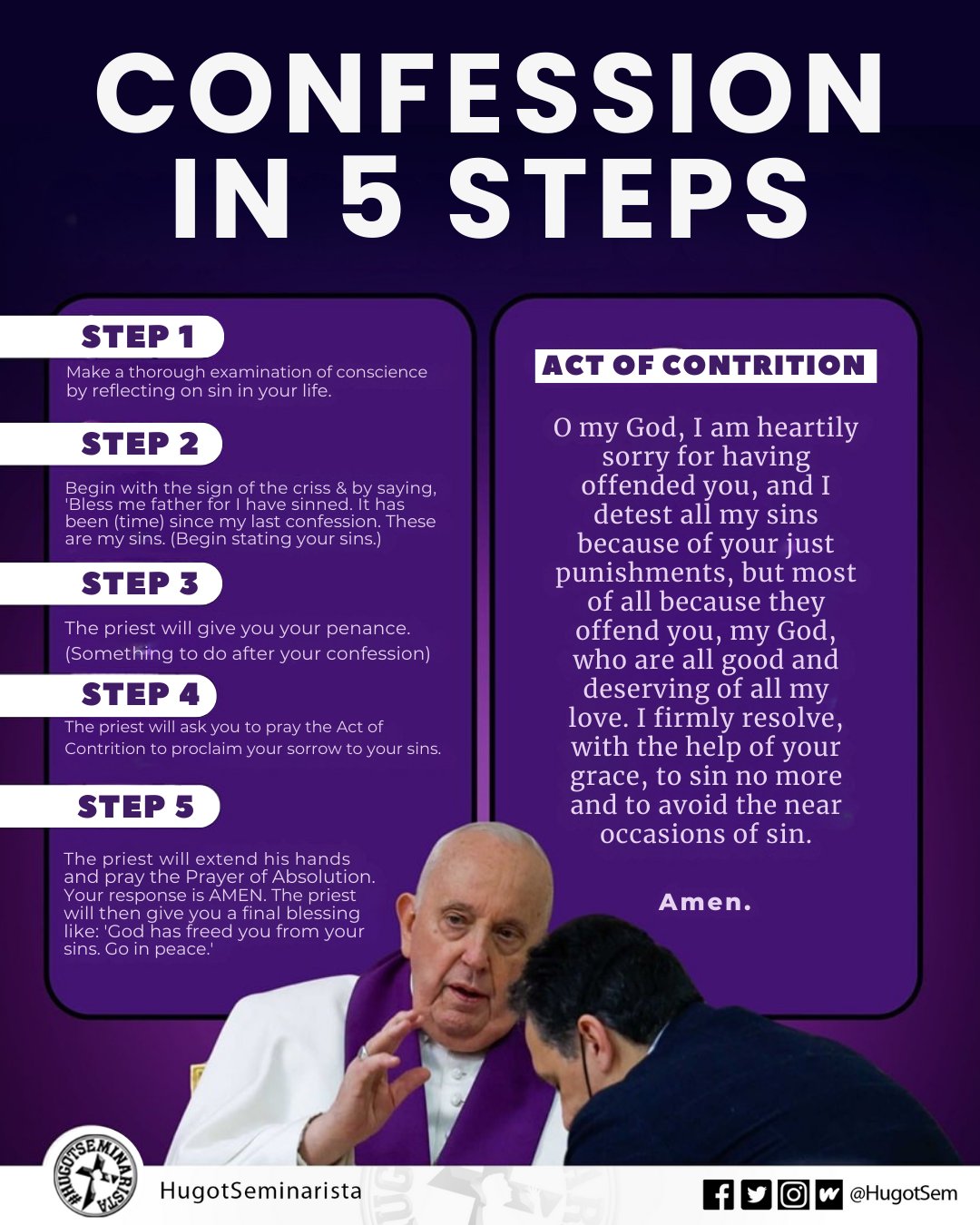
Church teaching tells us that reception of the Eucharist needs to be done in a state of grace, meaning that you don’t have any burdens on your spirit that might get in the way of the Divine Love you are about to receive through the Blessed Sacrament. That’s not to say that the Eucharist can’t be transformative, or that we may receive not feeling like we are in a state of grace. Rather, the church is telling us that to get the most out of the experience, we need to have a heart open enough to receive the abundance of love that is already so much more than we can comprehend. If we unburden ourselves to the best of our ability, we are able to take in as much of that Divine Love as we are able.
 the hermit gardener