The Catholic Church believes that “Sacred Tradition and Sacred Scripture make up a single sacred deposit of the Word of God . . .” (Catechism of the Catholic Church, paragraph 97).
In the Catechism of the Catholic Church, the Church reasons that:
“The apostles left bishops as their successors. They gave them their own position of teaching authority.” (Par. 77)
“This living transmission, accomplished through the Holy Spirit, is called tradition…” (Par. 78)
“Both Scripture and Tradition must be accepted and honored with equal sentiments of devotion and reverence.” (Par. 82)
Within the Catholic scope of Tradition, many doctrines have been “revealed” to the Church over the centuries. For example, there is the veneration of Mary, her Immaculate Conception and her bodily Assumption into heaven. There is also the Apocrypha, Transubstantiation, praying through the intercession of the saints, Purgatory, to list a few. Protestantism generally differs with Catholicism in these beliefs.
L’Église Catholique Eucharistique – The Eucharistic Catholic Church (ECE-ECE) embraces Catholic Tradition while holding what are considered to be “progressive views” on certain issues.
The authentically Catholic progressive finds empowerment through God’s grace. The sensible progressive also knows that memory, gratitude, and prudence are essential for the good of the whole, be it for an individual, the community, or for the larger society. The well-known expression, “Don’t throw out the baby with the bath water” applies to the progressive Catholic.
The dynamic of reform within Tradition has existed throughout the history of Catholicism. The Desert Fathers, the Trappists, and the Capuchins, among others, all played reforming roles, often with a bent toward recovering authentic tradition, in that, they worked to reform their traditions – to become something more radical, closer to the original intent. Yet they all combined it with the commitment to conserve those things that were valuable and good in their traditions.
Following their example, progressive Catholicism is truly Catholic when it seeks God’s will to change what must be changed, and safeguarding and renewing what must be kept.
-ECE-ECC Profession of Faith Document
I love peonies. There are three different kinds of peonies in my back yard, two of which have been here likely since the house was built in the late 1950’s early 1960’s. The flowers are huge, they smell sweet, they’re incredible to behold. They usually bloom later than everyone else’s. There’s also a smaller peony that I brought when we moved. All it’s life here, it’s thrown up one or two buds that turn black before they get much larger than a marble. This year, it threw up three buds. One’s already bloomed: it’s a beauty to look at but it smells horrible. The second bud is likely to bloom in the next few days, the third bud went black and did what it’s always done. But the plant has tripled in size!
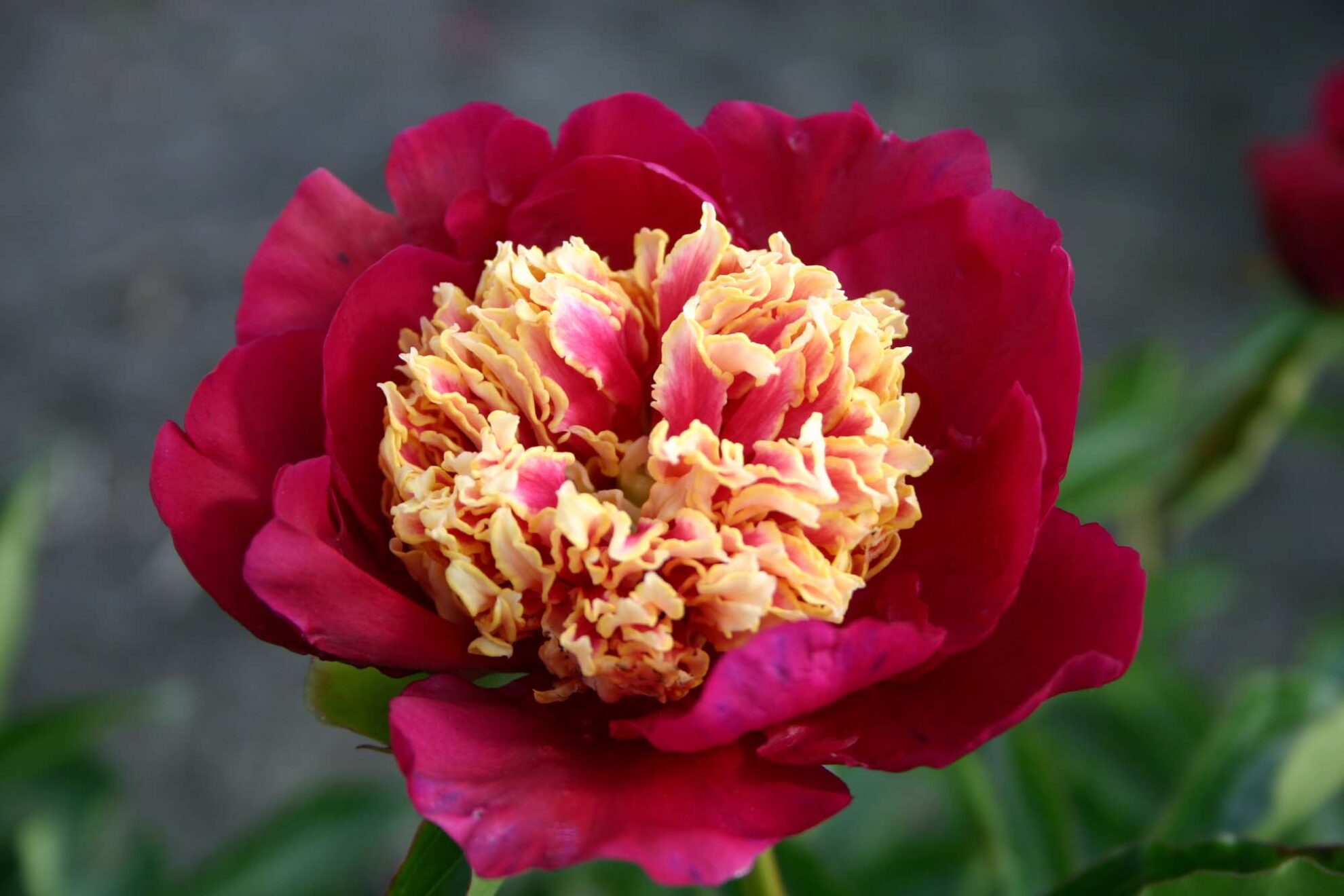
There’s a kind of peony that I saw in a garden about 15 years ago called “sword dancer”. Dark red petals, the interior almost looks like golden fire, and arising from those flames are petals that look like flaming swords. I’m still searching for it because I’d love to have it in my garden. It’s unlike any kind of peony I’ve seen.
Several months ago, someone asked me why I chose the Eucharistic Catholic Church, I suspect, rather than another affirming denomination. Why didn’t I become and Anglican, or a Roman Catholic working in the context of someone wanting to affect change from within the church, or return to my roots as a member of the United Church of Canada?
While they’re expressions of the Christian faith, they’re not the expression that fits the calling I’ve had all my life. Even the Roman church, arguably one of the longest expressions of Christian tradition–Catholic tradition–doesn’t fit the calling. Arguably, it was the closest to the calling.
It was a sword dancer peony.
We are Eucharistic Catholics because we put the Eucharist, the Blessed Sacrament, at the forefront of our faith. We continue to move in the spirit of defining change not as a break from tradition or a blasphemy, but rather as a means of expressing the vast diversity God intended. In a way, by putting Jesus at the forefront of our faith, by accepting the most marginalized and the intentionally forgotten, we acclaim that in the radical changes of the Church, some of the most precious of God’s children were cast aside and forgotten. Tacitly ignoring those we have left behind is a mortal sin: it is turning away those who hold the face of Christ.
As Eucharistic Catholics, it is our calling not just to open the door to all, it is our duty to step out, to demonstrate our profession with words and deeds. This is part and parcel of our founding bishops: our history is rooted in Sacred Heart Roman Catholic Church and the courageous who stood at a communion rail at a time when people were segregated, lynched. Our history is rooted in the struggle at Stonewall, the murder of Harvey Milk, the murder of Mathew Shepard.
This is not a “western” struggle. This is a universal struggle. It is a struggle that requires the foundations of the Church, beginning with Jesus Christ.
“Progressive Catholicism is truly Catholic when it seeks God’s will to change what must be changed, and safeguarding and renewing what must be kept.”
 the hermit gardener