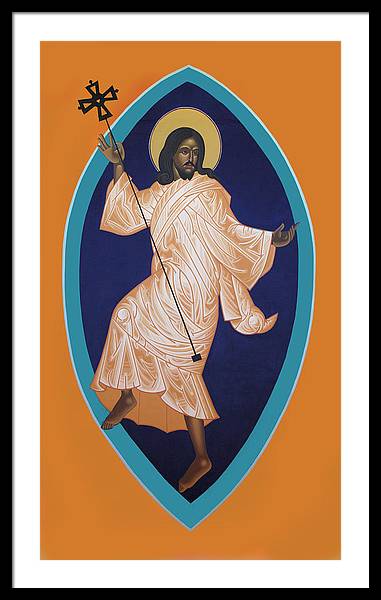
The day before…and the day after.

Today is the feast of the Impression of the Stigmata upon St. Francis of Assisi.

Memories flood back to me today of being in a small oratory in Toronto receiving the remainder of my minor orders, the deaconate. It was a warm day; the light glistened off Lake Ontario. I sweat so much.

The next day, meeting at the church we’d rented–the same church used in Kim’s Convenience, the Vietnamese Victory Church. I was ordained a priest in Appa’s Church. The Sunday following where I celebrated my first Mass, sweat a lot more, made mistakes, but it was ok!

When I was preaching today, I talked about what it must have been like for Francis, to want to hide the stigmata from his brothers, from those in his community; how they must have hurt. I can only imagine the pain of that blessing.

I talked today about how we, as Christians, are called to see when we receive the mark of Christ. Doing the right thing, carrying our cross, is never easy. Each time we are challenged to call out injustice, we are called to advocate for justice, when we are called into the silence of prayer, or the praise of celebration we are finding the marks of Christ.

We should not be ashamed, or afraid. Be proud, have courage. Know that we are loved by God, that we share siblingship with Our Lord, Jesus Christ.

The day before…and the day after.

Dinosaurs versus Jesus

I know, I know. It’s a line that I never saw myself as writing either.

When I was a young child, my parent’s would take me to the Royal Saskatchewan Museum in the evenings. There was (and is!) a large triceratops skull there–at the time, it was in the basement of the museum such that as a young child I could crawl on it. It was tangible, it was real, it was cool! It was old. Older than anything I knew about.

History leaves imprints like fossils. At first, we may not know how to handle or explain the evidence in front of us. Dragon bones! Then bones assembled in all kinds of ways, creating all kinds of strange looking animal remains. When we applied common sense, patience, and knowledge of the evidence around us, the skeletons started to look different. We started to have a more detailed understanding of what these creatures were, how they lived, and now with the additional information of the fossil record, we know what some of their skins looked like, and that some may have had feathers, and that their ancestors fly around us to this day as birds.

It is often easier to believe in dinosaurs than it is that a man, a teacher, was crucified around 2000 years ago, was buried in a tomb, then three days later returned to the living because he was both God and man.

It’s ludicrous!

For starters, people don’t come back from the dead. It is a simpler concept that his body was taken from the tomb by his followers or by others to create the image that he was raised from the dead. It was more profitable somehow to do this.

There are, however, some fossils in the record that may help us.

People, including Jesus’ close followers, were consistently persecuted, killed for what they believed. This past Sunday, we said Mass on an altar stone that contained the relics of three saints and martyrs (even though we can’t be 100% sure who they are because there are a few saints and martyrs with the same names as the ones listed in the documentation that comes with this stone) that were killed between the mid 200’s and 1000 AD. That’s an 800 year stretch that people were killed for believing that a man was crucified, died, and was buried before returning from the dead three days later. Yes, people today die for their convictions and beliefs. These people also died for believing fundamental principles and values about the dignity of human life, the necessity of acts of charity and love. They believed the teachings of this particular man, a man who was God incarnate.

If they’d been killed for “Love your neighbor as you love yourself”, that would’ve been one thing. But it wasn’t just that. They believed this man was the son of God.

They believed that the sacrifice of the Mass was a direct connection to that death, the resurrection, a direct and tangible thing that recalled us to knowing this man personally. Do this in memory of me. Touch, taste, eat, drink, know. Do this in a certain way, gathered together as a family.

Dinosaurs versus Jesus

The Feast of the Trans-Figuration

This should’ve been about something else.

Is it just to accept assistance from an individual who was a party to an action that was unjust?

We need to define justice first: behavior or treatment that is fair or morally correct.

Who’s moral standards do we go by? I’m going t o suggest a simple one. Treat everyone the way you want to be treated. The Golden Rule is universal.

Was the eviction of the houseless at city hall just, based on these two measuring sticks? IT can be argued that it was morally correct because the city saw danger of fire, and wanted to protect its citizens in the camp. It could be argued that they were treated fairly because they were given notice. It could be argued that there are housing opportunities for them that they did not take advantage of.

It could also be argued that the presence of the camp was brought about because there was a lack of justice in the existing programming for houseless people. It could be argued that while there were safety issues due to addiction, due to crime, there is in fact a need for more significant harm reduction to help combat those issues. These were promised that were made by city hall, and then broken by city hall.

So while the eviction action might have seemed just in the minds of those conducting it, an action is not just if it is not conducted with overall fairness Given how these people have been treated in the past, and are continuing to be treated, I believe the eviction of the camp was not, in fact, a just action.

Were they treated the way we want to be treated? Have they been treated the way they should be treated? Will they be treated the way we would hope to be treated were we found to be houseless?

What about the other side of this coin?

Is it just to potentially jeopardize the only significant source of income for a home that houses at risk youth in the 2SLGBTQIAP+ by pointing out that one of the people participating behaved unjustly towards another at risk group in our city?

Certainly, these concerns being brought up, these questions being asked, could be seen as an attack by the organizers of a cause that serves a greater good. That’s compounded by the possibility that needed funds to keep a home open could be at risk. Our youth could be at risk if this home were to close.

When a politician takes part in an action that appears to be unjust, and draws a line by doing so between those who can be heard and those who cannot, the question that must be asked is this:

Is this individual trustworthy given that their actions are not consistently just?

Are those who align themselves trustworthy?

Is it morally acceptable to accept the fruits of the actions of an individual who is applying a justice that favors some over others?

Does the action of one individual negate the actions of others?

In a Facebook post recently, I categorized this fund raising event as “caucasian” That was an incorrect term, and I ask the community to forgive me for the potential implications of the use of that term. The correct term I should’ve used was privileged. The term privileged in this context means that the event is focused on a certain group of people who have the means to provide assistance to those who do not have the means. That in itself, it could be argued, isn’t an issue.

However, it becomes an issue when the privilege stops us from seeing the reality of the situation.

The study of philosophy literally saved my life. One of my heroes of philosophy urged us to trust the test of experience.

Keeping that in mind.

Let us define privilege as a right or immunity granted as a peculiar benefit, advantage, or favor. Justice cannot exist in a state of privilege. Justice is meant to destroy privilege.

Did justice exist in the action of evicting the camp in front of city hall?

Does justice need to be consistent, or can it change overnight?

Are we wrong for wanting to question an individual who is a leader and claims allyship in our community? Its difficult to ask that question, and asking that question may cause potential harm to the vulnerable the fundraiser is designed to protect.

But how safe are those vulnerable who are being protected by the monies being raised if the policies of one of the individuals in the fundraiser is to treat vulnerable people by applying justice differently depending on the type of vulnerability?

These are big questions that need to be asked by everyone involved. Not asking these questions because it may rock the boat, while claiming a need to be protective, is privileged.

Challenging privilege is frustrating to those in the state of privilege because it seems fruitless. It gets in the way of what’s necessary to get things done, to protect the status quo. However, for those who are not in a condition of privilege, like my friend who is confined to a wheelchair and faces the challenges of accessibility daily, or another friend who wants to contribute to a worthy cause and enjoy a show but needs to spend money required to pay rent and buy food to do so–these challenges aren’t irrelevant. Aspects of this fundraising experience limit their ability to participate fully.

More often than not, it stops with argument and a need to be the “winner” or the one who is “right” rather than seeing the other side of the coin. It ends because the need for self preservation supersedes understanding that the very act of self preservation they engage in works opposite to inclusivity; an inclusivity that the 2SLGBTQIAP+ community has been actively fighting for to the tune of almost 75 years, and continues to fight for today.

So I would conclude this.

It is just that an event is held to raise money for a vulnerable group within our community. However, it is morally questionable to include an individual in that fundraising event who has, by virtue of recent events, presented a concept of justice that is not equal for all. This then unfortunately forces those involved into a position where they must in some way define their concept of justice to be one that is consistent with behavior and treatment that is fair and morally correct, doing unto others what they would have done to themselves. I think that can be done. But it will require effort outside of the event as well as during the event.

As it was pointed out to me by someone on the other side of the coin, this even has been a point of education and change for at least one person. Everyone in this event has the opportunity to change what their concepts of justice are. They have the opportunity to demonstrate this change with meaningful action. But that action must have willingness, and it must be sincere, and it must be immediate.

Meanwhile, the vulnerable on the other line that has been drawn require our help. So let’s let the privileged argue about how we are wrong, and focus our energies on the vulnerable that need our help instead.

The Feast of the Trans-Figuration

What I’ve Learned in 52 Years

Yoga. Gotta love it.

The actual caption to the photo above is “Elderly Falls”. Sounds like a nice vacation spot, doesn’t it?

I recently celebrated my 52nd birthday! Here are some of the things that I look back on as nuggets. Some may be nuggets of wisdom.

1. There is, in fact, such a thing as too much coffee.

2. While there is a certainty that you can not get enough sleep, for some reason your body begins to push the limits. Having too much coffee makes it worse. I’m lucky if I get six hours now.

3. Plants are living creatures. They respond to your touch, your voice, your moods. They heal. In larger numbers, they can heal sometimes in larger proportions.

4. Not everyone will agree with you. When you feel the colour red bubbling up inside you, take a breath. Red feelings aren’t always the best feelings to lead with.

5. Change, although uncomfortable and inevitable, is sometimes not so bad. It can be horrible. I mean, it may seem horrible. Ok, sometimes it just sucks. Especially if it’s a shaking out of a comfortable routine. Nobody likes to leave a warm bed. But if we always stayed in bed, we’d shit the bed. And bed soars.

6. It’s ok to be different in a way that people look at you in a puzzled way.

7. It’s ok to not make sense to other people.

8. It’s ok to talk to yourself, or be confused at things other people find simple. We all see the world through different windows. Some people are lucky enough to have stained glass.

9. Dogs are angels. Cats are also angels, but I’m a dog person. Even if they pee on the rug, it’s an angel.

10. The hardest thing to learn in the world is that you’re almost always going to have an internal reaction to what someone says, what someone does. Sometimes those reactions are going to be good, sometimes they’re going to feel really gross. Being nervous and reacting in nervous ways are normal for a lot of us, especially those of us who’ve experienced trauma in our lives. The trick is to know that being nervous doesn’t always look like you’re nervous. The bigger trick is learning to not let the nervousness control your reactions. People agree to do things they don’t want to do because this all the time. People become things they don’t always want to be because of the trauma in their past.

Take a breath. Pause if you can. Try to be logical about it if you can. Make as good a choice as you can about the situation. You can always cry with someone or rage with someone after. And you’ll always grow, even if you can’t see the growth.

Plants are doing that kind of growth all around you all the time. So are your fingernails and your hair. So there.

11. “Not my monkeys, not my circus–but I know who the clowns are.” -author unknown

12. Faith, prayer, and dialogue with God are ways to keep a solid foundation in your life. It doesn’t mean that things aren’t going to get rocky or boring. It means that you’ll ride it out easier.

12.5. I remember strange things from my past, mostly embarrassing things, or things or moments when I felt awkward or was rolling downhill towards despair. If this happens to you, do not worry. I think that it’s one of two things:

It’s your brain, recognizing it’s full, needing to dump data to make space. By reliving the memories that aren’t the greatest it’s dumping to create space for more.

or

You’ve reached a point where you’re able to cope with the emotions around the event better, so your brain brings it up so you can resolve it emotionally, and walk away from it.

12.75 My aunt makes the best black forest cakes.

What I’ve Learned in 52 Years

The Profession: The Literature, The Sacraments, The Mass, and Purgatory

I resolutely accept and embrace the apostolic and ecclesiastical traditions, liturgies and other practices of the One Holy Catholic and Apostolic Church. I accept Sacred Scripture as the inspired word of God given to numerous authors in differing circumstances. I acknowledge that, while its many writings are of different characters and therefore of unequal pertinence, Sacred Scripture in the light of the message of Christ is normative for the conduct of our lives in accord with God’s will.

I also acknowledge that there are truly and properly seven Sacraments, instituted by Jesus Christ our Lord, and that they are necessary for the salvation of the human race, although it is not necessary for each individual to receive them all. I acknowledge that the seven Sacraments are: Baptism, Confirmation, Holy Eucharist, Penance, Extreme Unction, Holy Orders, and Matrimony; and that they confer grace. I also accept and acknowledge the customary and approved rites of the Catholic Church in the solemn administration of these sacraments. I accept each and every article on original sin and justification declared and defined by the Catholic Church.

I likewise profess that in the Mass a true, proper and propitiatory sacrifice is offered to God on behalf of the living and the dead, and that the body and blood together with the soul and divinity of our Lord Jesus Christ is truly, really, and substantially present in the most holy Sacrament of the Eucharist, and that there is a change of the whole substance of the bread into the body, and of the whole substance of the wine into blood; and this change the Catholic Church calls transubstantiation. I also profess that the whole and entire Christ and a true Sacrament is received under each separate species.

I firmly hold that there is a purgatory, and that the souls detained there are helped by the prayers of the faithful. I likewise hold that the saints reigning together with Christ should be honored and invoked, that they offer prayers to God on our behalf, and that their relics should be venerated. I firmly assert that images of Christ, of the Mother of God ever Virgin, and of the other saints should be owned and kept, and that due honor and veneration should be given to them.

-ECE-ECC Profession of Faith Document

There’s a lot going on today. In reality, each of these paragraphs could’ve been broken down and given their own homily.

There are many ways to God in prayer. These ways can include writing, scriptures, and the sacraments: more specifically the Mass. I spoke today about the difficulties we have in a society that relies on the contributions of science, contributions that improve our lives and that when it comes to facing the altar on sometimes, it can be hard to accept that the bread and wine transform to become the Precious Body and Blood of Our Lord Jesus Christ. And yet, time after time, I have stood at the altar and felt shaken, felt tears welling up. When I first started practicing the Mass towards my ordination, even though I acknowledged that this was not a consecration, I found myself sobbing, grateful and inexplicably moved by what I was doing. It transformed me.

I spoke today about how transubstantiation takes place at the time of consecration, but transformation also takes place when the Body and Blood touches our hands, our lips. We are transubstantiated, in a way. We become living tabernacles taking the Eucharist into the world. The more we do this, the more we are strengthened and transformed, and that is what will cause people around us to question. Our job is to allow them to question, to pull back the veil in their own time, and to gently acknowledge the transformations that we may see. They will happen when we least expect it, sometimes at the most inconvenient times, and yet it is crucial that we step up.

I also spoke today about the concept of original sin. I stand by the teaching I’ve taught in the past that sin is that which gets in the way of experiencing perfect love from the Divine, and being able to express that love, to pass that love on, in a Divine way to others. I spoke about how our choices often get in the way because they require us to sacrifice, to give up pleasure or what we perceive to be pleasure, for a greater good. These days, the best example I can come up with is drumsticks. It’s a delicious ice cream treat and I have a hard time stopping at one. But if I love myself, if I allow the Divine Expression of Love to be present, I will be aware of the discipline of saying “Maybe no drumstick today Pete…what about an apple?”

When it comes to Purgatory….

In the history of the tradition of the church, we have sometimes picked up ideas that fit the narrative of the Christian Faith, the Christian experience. Angels, for example, were not something active in our belief until later in the early church. While belief in angels may not be consistent with the timeline of Christianity, I know that exorcists who call on St. Michael know the results that occur. The narrative of angels, of guardian angels, proves by the test of experience. Likewise, purgatory could be argued to be a place that was described by Plato and picked up by earlier church fathers. And so on, and so on.

We can live our lives either wondering constantly what’s on the other side of the door, and be so focused on that we loose sight of those in purgatory before our eyes, in hell before our eyes in this life, right now. As Catholics, and as those of us who follow St. Francis, we often loose sight of those right before our eyes and the pain, the suffering they are experiencing right now. Many will use the opportunity to give aid as a door to proselytizing. Again, as Eucharistic Catholics our job isn’t to proselytize. It’s to give aid, to give comfort, to provide compassion, to allow the opportunity for inner questioning to take place, and to be there where the individual pulls back the veil and wants to step forward.

God will transform the soul. Christ will transform the soul. We simply love, listen, and watch.

The Profession: The Literature, The Sacraments, The Mass, and Purgatory

The Profession: Faith

We profess the Catholic Christian faith.

Our Statement of Faith holds to orthodoxy as it is to be found in the Tradition of the Church, and specifically in the Roman Tradition. This Tradition is constituted of the statements of Faith found in the Nicene-Constantinople Creed as expressed and validated by the Council of Trent. As such, we profess the following:

With firm faith I believe and profess all and everything which is contained in the creed of faith, which the holy Catholic Church uses; namely:

I believe in one God, the Father almighty, maker of heaven and earth, and of all things visible and invisible; and in one Lord Jesus Christ, the only-begotten Son of God, born of the Father before all ages; God from God, light from light, true God from true God; begotten not made, of one substance with the Father; through whom all things were made; who for us and for our salvation came down from heaven, and was made incarnate by the Holy Spirit of the Virgin Mary, and was made human. He was crucified also for us under Pontius Pilate, died, and was buried; and He rose again the third day according to the Scriptures, and ascended into heaven; He sits at the right hand of the Father, and He shall come again in glory to judge the living and the dead, and of His kingdom there will be no end. And I believe in the Holy Spirit, the Lord, and giver of life, who proceeds from the Father and the Son; who equally with the Father and the Son is adored and glorified; who spoke through the prophets. And I believe that there is one, holy, Catholic, and apostolic Church. I confess one baptism for the remission of sins; and I hope for the resurrection of the dead, and the life of the world to come. Amen.

-ECE-ECC Profession of Faith Document

When I spoke yesterday about this part of our profession of faith, I remarked that there was a lot contained in the creed: the sentences are very, very long! The early fathers wanted to make sure that there was clarity in what was being transmitted because at this time in history, there was a lot going on in terms of ‘what we believe’.

I also spoke about how, in his homily that morning, Archbishop LaRade spoke about how the Gospel reading of the day referenced false prophets, and how sometimes we may question who we are.

How do we know we’re in this for the right reasons?

The last 24 hours before I began my journey into my vocation, I had a seizure of doubt. What if I was making a colossal mistake? What if what I was doing was actually counter to what I should be? What if the Roman Church was right, and I was in fact suffering from same sex attraction, that I needed to live my life as a eunuch, unmarried, unable to experience sexual intimacy?

What if, in doing what I was about to do, what I felt called to do, I would be condemned to eternal damnation? For me, this was (and IS!) a serious consideration! Literally 3 hours before I was to make my baptismal vows, I was 90% convinced that what I needed to do was pack my things, take the train to Pearson airport, and try to get a flight back to Regina. But I didn’t. I stayed.

The next three days were a whirlwind. And graces began to flow steadily into my life.

I met the love of my life. I began to get a sense of purpose beyond what I’d been doing, a sense of needing to push beyond the limitations I’d grown comfortable in. I broke out of those limitations and discovered a joy in serving those at the margins. I finished my seminary studies, and started the relationship of Christ and priest, knowing Him through the Blessed Sacrament.

I’d lie if I didn’t say there was still some doubt in my mind, that I still have moments when I ask myself if I’m doing the right thing. The difference is when I have those moments, when those moments grow in my mind and I consider if I’m doing the right thing, I ask myself: the lives that I’ve touched, the way my life has been touches and changed and blossomed, would this be the work of old scratch?

Except if this life is, in fact, not close to God’s plan, if I am headed in fact towards damnation, I would hope God would forgive me for trying to be closer to God.

The Profession: Faith

The Profession: In Exile

We choose to live as active witnesses in exile.

As individuals, members of the ECE-ECC have made a decision to live out their Catholic Christian vocations and lives in a Church which allows them the possibility of living authentic lives according to their consciences.

We have taken a position of active witness in relation to these deeply held beliefs. Rather than advocate from within the Roman Church, we have chosen to “actualize” those beliefs outside of the institution. While this conscious choice separates us from our parent institution, our exile brings freedom to live authentically as a child of God and pursue a deepening commitment to spirituality and mission.

Our active witness is not carried out in a reactive manner, where every action and decision of the parent institution propels the exiled into renewed action fed by anger. Rather, our active witness is characterized by the guidance of the Holy Spirit, discerned through a practice of daily meditation and liturgical prayer centered on the Eucharistic Heart of Jesus offered to us in the Eucharist. This latter characteristic implies and necessitates an individual attention to the development of an adequate level of psycho-spiritual maturity.

-ECE-ECC Profession of Faith Document

In front of city hall right now, there are roughly 70+ people living in tents to try and get the city government to honor their promise to end homelessness. This was a promise that was, in effect, reneged on because there were more votes to be had in supporting other less costly initiatives.

I am really, really proud of what our small community has accomplished in a short period of time. When the call went out, we were able to deliver over 200 bottles of water, multiple packages of nutritious food; individually there’s been contributions as well.

When I took out the water donation two weeks ago, I had some really fun interactions. When I brought the first case of water, an organizer got someone to help me take a case from my car. On the way back to get more water, I ran into Cam Fraser, an ally of the queer community, the former minister at Knox Met, and a strong supporter of anti-poverty initiatives. He’s also a good friend. He helped me take some water to be distributed.

I ran into an old friend from twenty plus years ago who got a chuckle out of the fact that he could now call me “Father Pete”–something I’m still getting used to!

We didn’t need the brick and mortar of the Vatican to organize, let alone the brick and mortar of a parish. We knew there was a need, and we acted to help fill that need as we continue to help fill that need.

Why do we choose to live in exile?

For me it comes down to something I call the poverty of love.

I could’ve entered the Roman Church and lied about who and what I was, and tried to pursue my vocation through a veil of lies, but how much of a hypocrite would I have been for doing that? Following my heart, it was a simple choice to enter into my vocation the way I did, and to work outside of the context and confines of Roman Catholicism. We live in exile because, while the trappings and the traditions of the Roman Church are appealing, they also draw us to recognize a reality that generates trauma rather than heal it. We practice our faith, holding to the long standing traditions, entering into the poverty of love–namely, giving all that we have, as best as we can, to fully embrace the love of Christ through the Eucharist, through the sacraments, and through works of charity and love.

The poverty of love recognizes that in countries where we have missions such as Cameroon and Sierra Leone, 2SLGBTQIAP+ people are still persecuted, arrested, tortured, and murdered. The poverty of love calls us to recognize that our siblings, specifically our trans siblings, need to know they have a safe place in our missions. They need to know that there is sanctuary available. The poverty of love calls us to have courage to openly welcome those most marginalized. This is not just a poverty of Christian vocation, but of Franciscan vocation as well. It is the keystone to the foundations of the Eucharistic Catholic tradition.

A trans person cannot know there is sanctuary if it is not somehow offered to them. Silence, in this situation, is violence.

The poverty of love recognized that in Canada and the United States, we are more and more witnessing a removal of safety for the most vulnerable, the most poor, the most marginalized.

All of this feels incredibly overwhelming! We can’t affect change everywhere.

But we can affect change where we sit, where we stand, where we pray and meet in community.

In Regina, this comes in the form of creating safe worship space for 2SLGBTQIAP+ people, closed to heterosexual people. There are little, if no, queer worshiping spaces for queer people by queer people. As a priest, I’m called to serve the queer community; as a Eucharistic Catholic, I’m called to serve all who are disenfranchised. My oratory is open to anyone who wants to attend Mass, and this is something I make known.

It also comes from worshiping as a community, and serving as a community and as individuals. As winter comes, we will need to be mindful about obtaining winter clothing, sleeping bags, and high-energy consumables to help keep people warm. I know this is something we will be able to accomplish.

Sometimes it would be great to have the kind of resources that the Roman Catholic church has. Most of the time? It’s nice to be poor, to be in the company of fellow travelers.

The Profession: In Exile

The Profession: Commitment

The Catholic Church believes that “Sacred Tradition and Sacred Scripture make up a single sacred deposit of the Word of God . . .” (Catechism of the Catholic Church, paragraph 97).

In the Catechism of the Catholic Church, the Church reasons that:
“The apostles left bishops as their successors. They gave them their own position of teaching authority.” (Par. 77)

“This living transmission, accomplished through the Holy Spirit, is called tradition…” (Par. 78)
“Both Scripture and Tradition must be accepted and honored with equal sentiments of devotion and reverence.” (Par. 82)

Within the Catholic scope of Tradition, many doctrines have been “revealed” to the Church over the centuries. For example, there is the veneration of Mary, her Immaculate Conception and her bodily Assumption into heaven. There is also the Apocrypha, Transubstantiation, praying through the intercession of the saints, Purgatory, to list a few. Protestantism generally differs with Catholicism in these beliefs.

L’Église Catholique Eucharistique – The Eucharistic Catholic Church (ECE-ECE) embraces Catholic Tradition while holding what are considered to be “progressive views” on certain issues.

The authentically Catholic progressive finds empowerment through God’s grace. The sensible progressive also knows that memory, gratitude, and prudence are essential for the good of the whole, be it for an individual, the community, or for the larger society. The well-known expression, “Don’t throw out the baby with the bath water” applies to the progressive Catholic.

The dynamic of reform within Tradition has existed throughout the history of Catholicism. The Desert Fathers, the Trappists, and the Capuchins, among others, all played reforming roles, often with a bent toward recovering authentic tradition, in that, they worked to reform their traditions – to become something more radical, closer to the original intent. Yet they all combined it with the commitment to conserve those things that were valuable and good in their traditions.

Following their example, progressive Catholicism is truly Catholic when it seeks God’s will to change what must be changed, and safeguarding and renewing what must be kept.

-ECE-ECC Profession of Faith Document

I love peonies. There are three different kinds of peonies in my back yard, two of which have been here likely since the house was built in the late 1950’s early 1960’s. The flowers are huge, they smell sweet, they’re incredible to behold. They usually bloom later than everyone else’s. There’s also a smaller peony that I brought when we moved. All it’s life here, it’s thrown up one or two buds that turn black before they get much larger than a marble. This year, it threw up three buds. One’s already bloomed: it’s a beauty to look at but it smells horrible. The second bud is likely to bloom in the next few days, the third bud went black and did what it’s always done. But the plant has tripled in size!

There’s a kind of peony that I saw in a garden about 15 years ago called “sword dancer”. Dark red petals, the interior almost looks like golden fire, and arising from those flames are petals that look like flaming swords. I’m still searching for it because I’d love to have it in my garden. It’s unlike any kind of peony I’ve seen.

Several months ago, someone asked me why I chose the Eucharistic Catholic Church, I suspect, rather than another affirming denomination. Why didn’t I become and Anglican, or a Roman Catholic working in the context of someone wanting to affect change from within the church, or return to my roots as a member of the United Church of Canada?

While they’re expressions of the Christian faith, they’re not the expression that fits the calling I’ve had all my life. Even the Roman church, arguably one of the longest expressions of Christian tradition–Catholic tradition–doesn’t fit the calling. Arguably, it was the closest to the calling.

It was a sword dancer peony.

We are Eucharistic Catholics because we put the Eucharist, the Blessed Sacrament, at the forefront of our faith. We continue to move in the spirit of defining change not as a break from tradition or a blasphemy, but rather as a means of expressing the vast diversity God intended. In a way, by putting Jesus at the forefront of our faith, by accepting the most marginalized and the intentionally forgotten, we acclaim that in the radical changes of the Church, some of the most precious of God’s children were cast aside and forgotten. Tacitly ignoring those we have left behind is a mortal sin: it is turning away those who hold the face of Christ.

As Eucharistic Catholics, it is our calling not just to open the door to all, it is our duty to step out, to demonstrate our profession with words and deeds. This is part and parcel of our founding bishops: our history is rooted in Sacred Heart Roman Catholic Church and the courageous who stood at a communion rail at a time when people were segregated, lynched. Our history is rooted in the struggle at Stonewall, the murder of Harvey Milk, the murder of Mathew Shepard.

This is not a “western” struggle. This is a universal struggle. It is a struggle that requires the foundations of the Church, beginning with Jesus Christ.

“Progressive Catholicism is truly Catholic when it seeks God’s will to change what must be changed, and safeguarding and renewing what must be kept.”

The Profession: Commitment

Trans people are Sacred: An open letter to our priests, bishops, and congregants in Canada, the United States, Sierra Leone, Cameroon, Russia, and Cuba.

Traduction française ci-dessous.  Traducción al español abajo.

“L’Église Catholique Eucharistique – The Eucharistic Catholic Church (ECE-ECE) embraces Catholic Tradition while holding what are considered to be “progressive views” on certain issues.” One of the reasons I was drawn to the Eucharistic Catholic Church was this linking of old and new in a cohesive blending that resulted in a beautiful expression of the ancient faith.

In the late 1940’s, brave people in one of the most segregated parts of the United States, a place where traditional values included the de-valuing of people as a right, stood at a communion rail in a Roman Catholic church to stand against the belief that some people are less valued by God than others. From this, the Eucharistic Catholic Church eventually took hold in New York city after the Stonewall riots, a struggle that took place between marginalized and oppressed people who were targeted to keep them marginalized. That struggle was led by brave people, including Marsha P. Johnson and Silvia Rivera.

I’m ashamed to say that in the course of our struggle for rights as queer people, I and many others forgot about those who were most sacred. We left behind in many cases Trans people; in our eagerness for the fight, we forgot about people of colour.

Forgive me.

Our struggle was in vain because we had ignored you, the most precious of our communities. Trans people, Indigenous people, people of colour

The Eucharistic Catholic Church’s statement of faith says:

“As individuals, members of the ECE-ECC have made a decision to live out their Catholic Christian vocations and lives in a Church which allows them the possibility of living authentic lives according to their consciences.

We have taken a position of active witness in relation to these deeply held beliefs. Rather than advocate from within the Roman Church, we have chosen to “actualize” those beliefs outside of the institution. While this conscious choice separates us from our parent institution, our exile brings freedom to live authentically as a child of God and pursue a deepening commitment to spirituality and mission.”

We must be clear: living authentically to practice our vocations in this context does not give us the right to exclude those marginalized: to do so is to deny the reality that we ourselves are marginalized, and needed to find sanctuary within the ECC-ECE. This is a truth that applies to us all, regardless of where we live, regardless of the risks which we may face for affirming these beliefs, which include:

“Respect for the diversity of religious and spiritual traditions by which persons of good will seek to know God;
Equality of sexual orientations, whereby is found in homosexual, bisexual and transgendered people the creative purpose of God and whereby is found in the conjugal relationship of all couples the Sacrament of God’s love….”

While it may be convenient to argue that differences in political views and cultural norms give us exemption, as Eucharistic Catholics we are called to assert that it is truly right and just to believe that those most vulnerable are sacred, that they above all others are to be welcomed to our tables, our altars, that we should be washing the feet of these people, that in these faces where we are most challenged to, we are called to see the face of Jesus Christ.

There is no pass because we live in a culture or nation which believes that Trans people have no value, or are confused, or are going against the will of God who created them one way. It is more important in these situations to advocate for Trans people, especially because if we do not, we have no right to believe we ourselves are in exile. When we make the judgement that was made against us, we become what we claimed not to be: the oppressor, the colonizer, the racist, the homophobe. We take a step away from the values that our church was founded on.

From the Gospel of Mathew:

“Then the King will say to those on his right, ‘Come, you who are blessed by my Father; take your inheritance, the kingdom prepared for you since the creation of the world.  For I was hungry and you gave me something to eat, I was thirsty and you gave me something to drink, I was a stranger and you invited me in,  I needed clothes and you clothed me, I was sick and you looked after me, I was in prison and you came to visit me.’

“Then the righteous will answer him, ‘Lord, when did we see you hungry and feed you, or thirsty and give you something to drink?  When did we see you a stranger and invite you in, or needing clothes and clothe you?  When did we see you sick or in prison and go to visit you?’

 “The King will reply, ‘Truly I tell you, whatever you did for one of the least of these brothers and sisters of mine, you did for me.

We, as Eucharistic Catholics in Canada, the United States, Sierra Leone, Cameroon, Cuba, and elsewhere are supporters of Trans and Queer lives. If we are not supporting those lives, or if we are silent, we stand silent to the sacrifices of people like FannyAnne Eddy, Jean-Claude Roger Mbede, those who found safety in the Mariel boatlift, and the individuals like George Augustine Hyde and Robert Mary Clement who were part of the founding movement of our church.

I call on all members of our congregation to renew their commitments to the protection of marginalized peoples, specifically in regions where Trans/Queer people are at greater risk of harm.


L'Église Catholique Eucharistique - L'Église catholique eucharistique (ECE-ECE) embrasse la tradition catholique tout en tenant ce qui est considéré comme des "points de vue progressistes" sur certaines questions. " L'une des raisons pour lesquelles j'ai été attiré par l'Église catholique eucharistique était ce lien entre ancien et nouveau dans un mélange cohérent qui a abouti à une belle expression de la foi ancienne.

À la fin des années 1940, des personnes courageuses dans l'une des régions les plus ségrégées des États-Unis, un endroit où les valeurs traditionnelles incluaient la dévalorisation des personnes en tant que droit, se tenaient à un rail de communion dans une église catholique romaine pour s'opposer à la croyance que certaines personnes sont moins valorisées par Dieu que d'autres. À partir de là, l'Église catholique eucharistique s'est finalement installée à New York après les émeutes de Stonewall, une lutte qui a eu lieu entre des personnes marginalisées et opprimées ciblées pour les maintenir marginalisées. Cette lutte a été menée par des gens courageux, dont Marsha P. Johnson et Silvia Rivera.
J'ai honte de dire qu'au cours de notre lutte pour les droits en tant que personnes queer, moi et beaucoup d'autres avons oublié ceux qui étaient les plus sacrés. Nous avons laissé derrière nous dans de nombreux cas des personnes trans ; dans notre ardeur au combat, nous avons oublié les gens de couleur.

Pardonne-moi.


Notre lutte a été vaine car nous vous avions ignoré, la plus précieuse de nos communautés. Personnes trans, Autochtones, personnes de couleur

La déclaration de foi de l'Église catholique eucharistique dit:

"En tant qu'individus, les membres de l'ECE-ECC ont pris la décision de vivre leur vocation chrétienne catholique et de vivre dans une Église qui leur donne la possibilité de vivre une vie authentique selon leur conscience.

Nous avons pris une position de témoin actif par rapport à ces croyances profondément ancrées. Plutôt que de plaider au sein de l'Église romaine, nous avons choisi « d'actualiser » ces croyances en dehors de l'institution. Alors que ce choix conscient nous sépare de notre institution mère, notre exil apporte la liberté de vivre authentiquement en tant qu'enfant de Dieu et de poursuivre un engagement approfondi envers la spiritualité et la mission."

Soyons clairs : vivre authentiquement pour pratiquer nos vocations dans ce contexte ne nous donne pas le droit d'exclure les marginalisés : le faire, c'est nier la réalité que nous sommes nous-mêmes marginalisés et que nous devions trouver refuge au sein de l'ECC-ECE. C'est une vérité qui s'applique à nous tous, quel que soit l'endroit où nous vivons, quels que soient les risques auxquels nous pouvons être confrontés pour affirmer ces croyances, notamment :

« Le respect de la diversité des traditions religieuses et spirituelles par lesquelles les personnes de bonne volonté cherchent à connaître Dieu ;
Egalité des orientations sexuelles, par laquelle se trouve chez les personnes homosexuelles, bisexuelles et transgenres le dessein créateur de Dieu et par laquelle se trouve dans la relation conjugale de tous les couples le sacrement de l'amour de Dieu..."

S'il peut être commode d'affirmer que les différences d'opinions politiques et de normes culturelles nous accordent une exemption, en tant que catholiques eucharistiques, nous sommes appelés à croire que les plus vulnérables sont sacrés, qu'ils doivent être les bienvenus à nos tables par-dessus tout, nos autels, que nous devions laver les pieds de ces gens, que dans ces visages où nous sommes le plus interpellés, nous sommes appelés à voir le visage de Jésus-Christ.
Il n'y a pas de laissez-passer parce que nous vivons dans une culture ou une nation qui croit que les personnes trans n'ont aucune valeur, ou sont confuses, ou vont à l'encontre de la volonté de Dieu qui les a créées d'une certaine manière. Il est plus important dans ces situations de défendre les personnes trans, surtout parce que si nous ne le faisons pas, nous n'avons pas le droit de croire que nous sommes nous-mêmes en exil. Lorsque nous portons le jugement qui a été porté contre nous, nous devenons ce que nous prétendons ne pas être : l'oppresseur, le colonisateur, le raciste, l'homophobe. Nous nous éloignons des valeurs sur lesquelles notre église a été fondée.

Extrait de l'évangile de Matthieu :

« Alors le roi dira à ceux qui seront à sa droite : ‘Venez, vous qui êtes bénis de mon Père ; prenez votre héritage, le royaume préparé pour vous depuis la création du monde. Car j'ai eu faim et vous m'avez donné à manger, j'ai eu soif et vous m'avez donné à boire, j'étais un étranger et vous m'avez invité à entrer, j'avais besoin de vêtements et vous m'avez habillé, j'étais malade et vous avez pris soin de moi, J'étais en prison et vous êtes venu me rendre visite.

« Alors les justes lui répondront : ‘Seigneur, quand t’avons-nous vu affamé et te nourrissons, ou assoiffé et t’avons-nous donné à boire ? Quand t'avons-nous vu un étranger et t'avons-nous invité à entrer, ou avons-nous besoin de vêtements et de t'habiller ? Quand t'avons-nous vu malade ou en prison et sommes-nous allés te rendre visite ?

« Le roi répondra : ‘En vérité, je vous le dis, tout ce que vous avez fait pour l’un de mes plus petits frères et sœurs, vous l’avez fait pour moi.’

En tant que catholiques eucharistiques au Canada, aux États-Unis, en Sierra Leone, au Cameroun, à Cuba et ailleurs, nous soutenons les vies trans et queer. Si nous ne soutenons pas ces vies, ou si nous restons silencieux, nous restons silencieux devant le meurtre de personnes comme FannyAnne Eddy, Jean-Claude Roger Mbede, ceux qui ont trouvé la sécurité dans l'ascenseur à bateaux de Mariel et des individus comme George Augustine Hyde et Robert Mary Clement qui faisaient partie du mouvement fondateur de notre église.

J'appelle tous les membres de notre congrégation à renouveler leurs engagements envers la protection des personnes marginalisées, en particulier dans les régions où les personnes trans/queer sont plus à risque de préjudice.

"L'Église Catholique Eucharistique: la Iglesia católica eucarística (ECE-ECE) adopta la tradición católica mientras mantiene lo que se considera "puntos de vista progresistas" sobre ciertos temas". Una de las razones por las que me atrajo la Iglesia Católica Eucarística fue esta unión de lo antiguo y lo nuevo en una mezcla cohesiva que resultó en una hermosa expresión de la fe antigua.

A fines de la década de 1940, personas valientes en una de las partes más segregadas de los Estados Unidos, un lugar donde los valores tradicionales incluían la desvalorización de las personas como un derecho, se pararon en un comulgatorio en una iglesia católica romana para oponerse a la creencia. que algunas personas son menos valoradas por Dios que otras. A partir de esto, la Iglesia Católica Eucarística finalmente se afianzó en la ciudad de Nueva York después de los disturbios de Stonewall, una lucha que tuvo lugar entre personas marginadas y oprimidas que fueron atacadas para mantenerlas marginadas. Esa lucha fue liderada por personas valientes, incluidas Marsha P. Johnson y Silvia Rivera.
Me avergüenza decir que en el curso de nuestra lucha por los derechos como personas queer, yo y muchos otros nos olvidamos de los más sagrados. Dejamos atrás en muchos casos a personas Trans; en nuestro afán de lucha, nos olvidamos de la gente de color.

Perdóname.

Nuestra lucha fue en vano porque te habíamos ignorado a ti, la más preciosa de nuestras comunidades. Personas trans, pueblos indígenas, personas de color

La declaración de fe de la Iglesia Católica Eucarística dice:

"Como individuos, los miembros de ECE-ECC han tomado la decisión de vivir sus vocaciones cristianas católicas y vivir en una Iglesia que les permita la posibilidad de vivir vidas auténticas de acuerdo con sus conciencias.

Hemos tomado una posición de testigo activo en relación con estas creencias profundamente arraigadas. En lugar de abogar desde dentro de la Iglesia Romana, hemos optado por “actualizar” esas creencias fuera de la institución. Si bien esta elección consciente nos separa de nuestra institución matriz, nuestro exilio brinda libertad para vivir auténticamente como hijos de Dios y buscar un compromiso más profundo con la espiritualidad y la misión".

Debemos ser claros: vivir auténticamente para practicar nuestras vocaciones en este contexto no nos da derecho a excluir a los marginados: hacerlo es negar la realidad de que nosotros mismos estamos marginados y necesitamos encontrar refugio dentro de la ECC-ECE. Esta es una verdad que se aplica a todos nosotros, sin importar dónde vivamos, sin importar los riesgos que podamos enfrentar por afirmar estas creencias, que incluyen:

“Respeto a la diversidad de tradiciones religiosas y espirituales por las cuales las personas de buena voluntad buscan conocer a Dios;
Igualdad de orientaciones sexuales, por la cual se encuentra en las personas homosexuales, bisexuales y transexuales el fin creador de Dios y por la cual se encuentra en la relación conyugal de todas las parejas el Sacramento del amor de Dios…”
Si bien puede ser conveniente argumentar que las diferencias en los puntos de vista políticos y las normas culturales nos otorgan una exención, como católicos eucarísticos somos llamados solo para creer que los más vulnerables son sagrados, que ellos, por encima de todos los demás, deben ser bienvenidos a nuestras mesas. nuestros altares, que debemos estar lavando los pies de estas personas, que en estos rostros donde más nos interpelan, se nos llama a ver el rostro de Jesucristo.

No hay pase porque vivimos en una cultura o nación que cree que las personas trans no tienen valor, o están confundidas, o van en contra de la voluntad de Dios que las creó de una manera. Es más importante en estas situaciones abogar por las personas trans, especialmente porque si no lo hacemos, no tenemos derecho a creer que estamos en el exilio. Cuando hacemos el juicio que se hizo contra nosotros, nos convertimos en lo que decíamos no ser: el opresor, el colonizador, el racista, el homófobo. Nos alejamos un paso de los valores sobre los que se fundó nuestra iglesia.

Del Evangelio de Mateo:

Entonces el Rey dirá a los de su derecha: Venid, benditos de mi Padre; toma tu herencia, el reino preparado para ti desde la creación del mundo. Porque tuve hambre y me disteis de comer, tuve sed y me disteis de beber, era forastero y me invitasteis a entrar, necesitaba ropa y me vestisteis, estuve enfermo y me cuidasteis, Estuve en la cárcel y viniste a visitarme.

“Entonces los justos le responderán: ‘Señor, ¿cuándo te vimos hambriento y te alimentamos, o sediento y te dimos de beber? ¿Cuándo te vimos forastero y te invitamos a pasar, o te vimos necesitado de ropa y te vestimos? ¿Cuándo te vimos enfermo o en la cárcel y fuimos a visitarte?

“El Rey les responderá: ‘En verdad les digo que todo lo que hicieron por uno de estos hermanos míos más pequeños, lo hicieron por mí’.

Nosotros, como católicos eucarísticos en Canadá, Estados Unidos, Sierra Leona, Camerún, Cuba y otros lugares, apoyamos las vidas trans y queer. Si no estamos apoyando esas vidas, o si guardamos silencio, permaneceremos en silencio ante el asesinato de personas como FannyAnne Eddy, Jean-Claude Roger Mbede, aquellos que encontraron seguridad en el puente de Mariel y personas como George Augustine Hyde y Robert. Mary Clement quienes fueron parte del movimiento fundador de nuestra iglesia.

Hago un llamado a todos los miembros de nuestra congregación para que renueven sus compromisos con la protección de los pueblos marginados, específicamente en las regiones donde las personas trans/queer corren un mayor riesgo de sufrir daños.
Trans people are Sacred: An open letter to our priests, bishops, and congregants in Canada, the United States, Sierra Leone, Cameroon, Russia, and Cuba.

Epilogue

The monk having completed his 40 days in the desert, returned to the comforts of the monastery. Comforts now considered as such, as before they might have been hardships.

This has been an enjoyable experience for me writing as the monk over Lent. It’s not always easy to keep regularly writing however, so the tale might not be as coherent as sometimes I’d like it to be.

I want to reach out in thanksgiving to all those who attended the Easter Vigil, my first public celebration of the Easter Vigil, this past Saturday. There were attendants both virtual and in person–the first time a public liturgy has been celebrated in my home. It’s becoming more and more clear to me that the graces of our faith manifest with diligence and dedication. The Worship Community of Our Lady of Guadalupe has taken its very first steps over the last few weeks, and recently we’ve been offered a second liturgical space: one that will allow us to celebrate the Mass in a more traditional setting, but also in a way that will allow us to open our worship space to all people who have felt slighted by their faith communities for whatever reason.

My faith walk has been so very enriched by the faces that have joined me on it. God love you all.

Epilogue