8-Rest to your soul

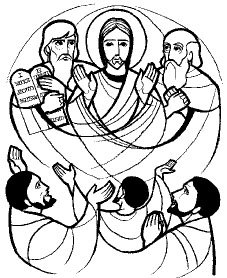
At that time Jesus answered and said: “I confess to thee, O Father, Lord of Heaven and earth, because thou hast hid these things from the wise and prudent, and hast revealed them to little ones. Yea, Father: for so hath it seemed good in thy sight. All things are delivered to me by my Father. And no one knoweth the Son but the Father: neither doth any one know the Father, but the Son, and he to whom it shall please the Son to reveal him. Come to me all you that labor and are burdened, and I will refresh you. Take up my yoke upon you, and learn of me, because I am meek, and humble of heart: And you shall find rest to your souls. For my yoke is sweet and my burden light.” Matthew 11:25-30

I spent about half an hour this morning meditating on this passage of Scripture, and I think that I got tangled up in what is said at the start. I committed it to the back of my mind, and went to work.

When I got home tonight after spending some time out doing errands, what my eyes fell upon was “And you shall find rest to your souls.”

I remember how complicated my mind used to be–riddled with lies, schemes, some visible to myself, some hidden even from my own conscious thoughts. I didn’t know who I was, and I tried very hard to simply be certain ideals of what I thought I should be. That’s a hard way to live, and I suspect that it’s the way many people live today.

Yesterday I was writing about how I had a hard time with my faith, a hard time knowing who Jesus was, was somewhat jealous of people who spoke about having a personal relationship. Yet, in meditating on this reading today, on falling on that portion of the reading, I realized that at some point, I discovered to my amazement that, for the most part, my mind was still. Not that the chatter hadn’t stopped, not that there weren’t and aren’t moments when I feel triggered into anxiety and have to try and work through it. But generally, as a rule, after I wake I feel at peace. I feel a sense of calm. I feel a portion of being at home, at rest, at comfortable ease with who I am as a person: someone who values honesty, integrity, trust, fidelity, beauty, serenity. I’m someone who wears the shoes of religious, of priest-to-be, of support worker, of writer, gardener, home maker. I am at a place where I am my most authentic self.

Perhaps in taking up the yoke, we begin to gather a sense of who Jesus is; maybe that’s the personal relationship. Knowing the fingerprint left behind in the clay of our souls.

This passage gives me great peace, and a sense of great calm.

8-Rest to your soul

7-Sacred versus Profane

At that time, when Jesus was come into Jerusalem, all the city was stirred, saying, “Who is this?” And the multitudes said, “This is the prophet, Jesus, from Nazareth of Galilee.” 
And Jesus entered into the temple of God, and cast out all them that sold and bought in the temple, and overthrew the tables of the money–changers, and the seats of them that sold the doves; and he saith unto them, “It is written, My house shall be called a house of prayer: but ye make it a den of robbers.” 
And the blind and the lame came to him in the temple: and he healed them. But when the chief priests and the scribes saw the wonderful things that he did, and the children that were crying in the temple and saying, “Hosanna to the son of David;” they were moved with indignation, and said unto him, “Hearest thou what these are saying?” And Jesus saith unto them, “Yea: did ye never read, Out of the mouth of babes and sucklings thou hast perfected praise?” And he left them, and went forth out of the city to Bethany, and lodged there. -Matthew 21: 10-17

There are three tall spruce trees in our back yard. They provide homes and food for the birds and squirrels, and shade the house in the hot summer sun. When the wind is high, and it has been high a few times in the last couple of months, it blows needles, cones, and branches east towards the house, covering the yard, and making the soil just a little more acidic. While there is benefit to the trees, there is also a cost.

In the reading today, Jesus is first identified. He is given authority by His identification, and this is important. If anyone else had gone into the temple and done what He had done, the consequences might have been very different. Yet, no one else did. Was there no one else who felt the way Jesus did about the money changers, the people selling goods for sacrifice? We see from the last part of the reading that yes, by the fact He received praise. There were those in the temple that knew it was wrong, but did not have the power to do anything to change it.

But what of the money changers, the people selling sacrificial goods, the people changing their money and buying the goods. Were they completely oblivious that they were in the precincts of the temple? Surely, they knew they were in a place that was set out as sacred rather than profane. And yet, even knowing this, they continued their practices. People followed along because no one questioned. It was easier not to question.

There was ease, and there was profit, for what was going on. The money changers profited, the sellers of sacrificial goods profited, the people changing their money to buy the goods profited. Yet, like the spruce trees in my yard, there were consequences that on the surface might not have seen to be detrimental, but over time would have poisoned the sacred with the profane.

Once Jesus opens the window and lets some fresh air in, so to speak, people come to the temple. They are blind, they are lame, they are healed, and Jesus is praised. God’s work can happen because there is room for it to happen. Those who were moved with indignation did so because it’s a natural response (perhaps a sinful one) to respond as if one has been victimized even though they will not acknowledge that they themselves have perpetrated as well. Sure, the function of the people changing money and selling and buying was disrupted; likely, people were shocked, upset, angry. Were they not intruding on the precincts of prayer?

What are our money changers? What are our sacrificial good sellers? What are the things in our lives that we allow to intrude on what is true, what is sacred? Have we made room in our lives for the sacred, or do we allow the profane to infiltrate our sacred precincts?

How easy is it for us to overturn the tables? How easy is it for us to overturn the chairs? How much easier for us to simply push through the crowds, continue changing our money, buy our doves, make sacrifice, and push back through the crowds to leave the temple? How is that meaningful? How is that significant?

7-Sacred versus Profane

6-Who am I?

At that time, Jesus came into the quarters of Caesarea Philippi: and he asked his disciples, saying: “Whom do men say that the Son of man is?” But they said: “Some John the Baptist, and other some Elias, and others Jeremias, or one of the prophets.” Jesus saith to them: “But whom do you say that I am?” Simon Peter answered and said: “Thou art Christ, the Son of the living God.” And Jesus answering said to him: “Blessed art thou, Simon Bar Jona: because flesh and blood hath not revealed it to thee, but my Father who is in heaven. And I say to thee: That thou art Peter; and upon this rock I will build my church, and the gates of hell shall not prevail against it. And I will give to thee the keys of the kingdom of heaven. And whatsoever thou shalt bind upon earth, it shall be bound also in heaven: and whatsoever thou shalt loose on earth, it shall be loosed also in heaven.” -Matthew 16: 13-10

I’m challenged in my faith most days–it doesn’t come easily to me. Where I have a very strong belief in God, I’m challenged when people speak about having a personal relationship with Jesus. Who is this? We have the Four Gospels, we have the letters of Apostles who walked with him. But I struggle to say that I have a personal relationship with Jesus Christ in the same way that I would say that I have a personal relationship with my co-workers or friends, or my fiancé.

My relationship with my fiancé is creeping up on four years. While there’s a certain level of comfort that’s come from having spent just about every day together, while there’s a sense of knowing who he is, what his values are, what he believes, what he stands for, there’s a small part of him that I can never really know. But I accept that as part of our relationship. Each day that we spend together building our life together brings me to a more comfortable place of knowing, or relying, of knowing he can rely on me.

I’ve know my mom and dad since I was born. The relationship that I have with them has not always been the best, but there’s a knowledge of who we are that’s very intimate because of the nature of that relationship.

In a sense, I know Plato, Aristotle, St. Augustine, St. Anselm, St. Thomas, Rene Descartes, Kant, Kierkegaard, Dr. Alvin Plantinga, and others from their writings and recorded works. In reading their words, I can have a sense of who they are. Even in reading the Old Testament, I have a sense of who David and Jonathan were, of who Solomon was, of who St. John and St. Paul were from the New Testament. But Jesus to me feels somehow like someone I have a difficult grasp knowing. I read the words of scripture, but somehow the presence is hard for me to know.

The writings of St. Francis have helped in that they have guided me to approach knowing Jesus through interactions with the marginalized, through eliminating the barriers that we place between ourselves and the marginalized. And that’s helped. In a weird way though it feels like I’ve connected more with St. Francis than with Jesus.

The later Father Thomas Keating helped in his direction and advocation of Centering Prayer. And in those moments, I do feel a quiet, stillness that makes it easier to hear God’s voice, to feel the Divine Presence that guides me in my prayer.

When I began to truly start to feel that I was getting closer was in practicing reading Mass, at the moments of consecration of bread and wine through the moments of consuming what, is still, bread and wine. And I can’t explain it in any words other than to say that, when reading this passage, I resonate with Peter’s words: Thou art Christ, the Son of the Living God.

Faith is trusting that knowledge, not knowing completely where it comes from, and accepting that believing it makes life better. It’s not about standing on the soap boxes and shouting about how good it feels, trying to convince someone else about how good it feels, and militantly trying to get them to jump on the bandwagon.

The Faith we find in the Lenten journey is a reminder that it’s ok to have challenges in believing. They’re normal. They have to happen for us to grow, and some of the spiritual greats had the same challenges. This is the desert. The place where we may not have the water of certainty to drink. Lent is about trusting the processes, continuing the practices of devotion, of faith, of charity, of love.

I have a relationship with Jesus today that I can’t explain. It simply is. And it feels to be deepening every day. That’s a challenge for me, for anyone living in a world of science and facts and politics and evidence. I can’t explain it. It just is.

6-Who am I?

5-Lead us not into Temptation

At that time, Jesus was led by the spirit into the desert, to be tempted by the devil. And when He had fasted forty days and forty nights, afterwards He was hungry. And the tempter coming said to Him: “If thou be the Son of God, command that these stones be made bread.” Who answered and said: “It is written, Not in bread alone doth man live, but in every word that proceedeth from themouth of God.”Then the devil took Him up into the holy city, and set Him upon the pinnacle of the temple, And said to Him: “If thou be the Son of God, cast thyself down, for it is written: That he hath given his angels charge over thee, and in their hands shall theybear thee up, lest perhaps thou dash thy foot against a stone.”
Jesus said to him: “It is written again: Thou shalt not tempt the Lord thy God.”Again the devil took Him up into a very high mountain, and shewed Him all the kingdoms of the world, and the glory of them, And said to Him: “All these will I give thee, if falling down thou wilt adore me.” Then Jesus saith to him: “Begone, Satan: for it is written: The Lord thy God shalt thou adore, and him only shalt thou serve.”
Then the devil left Him, and behold angels came and ministered to Him.
-Matthew 4:1-11

The temptation came after the fast. In my case, it came during.

When I was in my early 20’s, I was absorbed in the Indigenous culture of North America. I participated, I practiced, it was my life in may ways. I was told when I fasted that it would need to happen 4 times to complete the cycle. I only fasted three times. The last time was probably the most interesting for me, looking back. On the third day of not drinking or eating, I woke up in the early morning. A breath, an air, entered into the lodge I was sleeping/staying in, and it whispered into my soul with such strength that I swear today I can hear it in my memories. It said: you are hungry, you are thirsty, you are suffering, you don’t need to be doing this anymore. At that moment, I began to sob out, believing that I was hungry, thirsty, that I was suffering, that I wanted it to stop.

It was so subtle, so direct, and it transformed me into my grief. It redirected my intention so easily, and so powerfully, that I look back on that moment with somber reflection.

I had experienced the demonic.

Christ experienced grand temptations. Christ, it is implied, saw the Devil himself. In our cases, it’s much simpler for the demonic to act. And this time of Lent is a time to remember this. As we pray, as we focus ourselves in our devotion and remember the passion, remember the 40 days in the desert, we are reminded that it takes far less to tempt us. And we will be tempted. The temptations will come as quiet whispers, much like the one I experienced while fasting.

You don’t need to be fasting.

Later in life, I experienced a great depression that, when I look back, was harvested by something outside of myself. Every day that I cried, every day that I was saddened that life continued, every day that I looked at the reality that suicide was not an option, and that crushed me even more–the energy of these moments was harvested, consumed.

I know writing these statements will resonate with few.

But in every day that I walk the earth, I’m given little choices, of which, the decisions add up to either glory or grief.

At the end of His temptations, the angels ministered to Him. What this means isn’t clear, but the sense that I get is that in Christ’s holding out, He was tired. He suffered. The ordeal was difficult for Him. In a sense, this was a hint of the passion to come, a temptation to walk away from the Cross. Our temptations will also leave us tired, worn out. Yet, we know that we have our faith to refresh us. God has given his angels charge over you, that they guard you in all your ways. Upon their hands they shall bear you up, lest you dash your foot against a stone. (Psalm 90)

5-Lead us not into Temptation

4-Walking on Water

At that time, when even was come, the boat was in the midst of the sea, and he alone on the land. And seeing them distressed in rowing, for the wind was contrary unto them, about the fourth watch of the night he cometh unto them, walking on the sea; and he would have passed by them: but they, when they saw him walking on the sea, supposed that it was an apparition, and cried out: for they all saw him, and were troubled. But he straightway spake with them, and saith unto them, “Be of good cheer: it is I; be not afraid.” And he went up unto them into the boat; and the wind ceased: and they were sore amazed in themselves; for they understood not concerning the loaves, but their heart was hardened. And when they had crossed over, they came to the land unto Gennesaret, and moored to the shore. And when they were come out of the boat, straightway the people knew him, and ran round about that whole region, and began to carry about on their beds those that were sick, where they heard he was. And wheresoever he entered, into villages, or into cities, or into the country, they laid the sick in the marketplaces, and besought him that they might touch if it were but the border of his garment: and as many as touched him were made whole. -Mark 6:47-56

4-Walking on Water

3-Love your Enemies?

At that time, Jesus said to his disciples, You have heard that it was said, ‘You shall love your neighbor, and shall hate your enemy.’ But I say to you, love your enemies, do good to those who hate you, and pray for those who persecute and calumnate you, so that you may be children of your Father in heaven, Who makes His sun to rise on the good and the evil, and sends rain o the just and the unjust. For if you love those that love you, what reward shall you have? Do not even the publicans do that? Do not even the Gentiles do that? You therefore are to be perfect, even as your heavenly Father is perfect. Take heed not to do your good before me, in order to be seen by them; otherwise you shall have no reward with your Father in heaven. Therefor when you give alms, do not let your left hand know what your right hand is doing, so that your alms may be given in secret; and your Father, who sees in secret, will reward you. -Matthew 5: 43-48;6:1-4

These are quite possibly the two most challenging teachings Jesus gave to us. How can we, even in the cold light of fascism that is beginning to have courage to show itself, love? What does that love look like, the perfect love that we are called to embrace, to share?

I’m drawn to one of my favorite stories of St. Francis. In the early years of his spiritual first steps, Francis came to the understanding that there were limitations in place in his society that made certain people higher in status than others. In his case, this mainly had to do with wealth, with title; but more importantly, if you were unlucky enough to contract leprosy, regardless of who you were or where on the social ladder you stood, you became untouchable. The only treatment for leprosy was isolation in hopes that you did not infect your family or your community. It was a death sentence.

Francis was repulsed by lepers. So much so, that he himself would cross a road, turn his head, and cover his mouth out of revulsion when he saw one.

When I traveled to Toronto for the profession of my first vows as a Franciscan, and for the first two minor orders, I had the opportunity to see the Pride Parade. Toronto from the start of my visit was a city that dazzled me and left me awe struck. Pride in Toronto is a huge gathering, unlike anything I’d ever seen. My bishop and friend, Roger, stood literally against a wall holding an umbrella to protect us from the sun. In front of us, a stream of people walking–one group in one direct, the other in the opposite, just like a two lane road. From one direction, a homeless man, wearing old worn blue jeans, smiling and dancing and reveling. From the other, a well dressed, well groomed young man watched, covered his mouth, grimaced, and turned his head as he walked past.

I couldn’t help but see the parallels. I suspect I was meant to.

What makes the teaching of Christ Jesus, and by extension, St. Francis, so challenging is that we are confronted with the boundaries, the barriers, that keep us in rigid, protected order. Do we turn our faces and cross the road when we see the mentally ill, the drug addicted, the elderly, the immigrant, the conservative, the Trump supporter, the white nationalist?

How are the feelings of hate that a queer person may feel for an ultra-conservative any different from how an ultra-conservative feels hate for a queer person? Both believe with sincerity and absolute certainty that they are right and the other is wrong.

What does the hate, (which is actually fear), protect the other from? More importantly, and perhaps more disturbing, what does this unstated yet very valid agreement actually mean? Both agree to engage in hate. Both need the other to hate to justify their beliefs.

There’s no other way to describe this except diabolical. It is a diabolical participation that by its nature allows the hate to thrive, allows it to perpetuate, allows it to continue.

Which leaves the question to be asked: How does one love Donald Trump? Conversely for any Trump supporters reading this right now, how does one love a libtard? Those who act quickly without thinking will say love the sinner, hate the sin. And yet, in saying that, we still are giving into hate.

What is required is an absolute leap of faith. One so dangerous that when I’ve given this teaching in the past as part of a retreat, I watched as people actually reacted in confusion, in fear. I could see that their minds were somehow unable to process what it was I was saying. It made no sense to them. And I need to be honest. I don’t know the way to love your enemy with courage. I don’t know how to love someone who validated the extermination of a culture in China, or allows themselves to forget that the same assimilation continues to happen to Indigenous people right here in Canada. 20 years without clean drinking water is slow, obvious genocide. You can hear it in how people talk if you sit in a coffee shop long enough.

Maybe we do it in the same way we try to love the cold of winter, or the heat of summer. Maybe its simply asking what our comfort protects us from? What is it we are most afraid to embrace, and why can’t we?

Francis knew that the path to God was loving his enemy–and that’s the answer. The only true enemy we have is ourselves. And knowing this, we have built an entire society, culture, world, where each of us fully and discretely rejects this truth, and behave so that we can all act in ignorance together. The only way out is to find our lepers and embrace them. When we do this, our need to be public, our need to call for praise will diminish because the only thing that then matters is love. The only thing we must confess is that we have acted in ways that have limited our ability to love.

God love you.

3-Love your Enemies?

2-The Queer Centurion

At that time, when Jesus had entered Capharnaum, there came to Him a centurion, who entreated Him, saying, Lord, my servant is lying sick in the house, paralyzed, and is grievously afflicted. Jesus said to him, I will come and cure him. But in answer the centurion said, Lord, I am not worhty that You should come under my room; but only say the word, and my servant will be healed. For I too am a man subject to authority, and have soldiers subject to me; and I say to one, “Go,” and he goes; and to another, “Come,” and he comes; and to my servant, “Do this,” and he does it. And when Jesus heard this, He marveled, and said to those who were following Him, Amen I say to you, I have not found such great faith in Israel. And I tell you that many will come from the east and from the west, and will feast with Abraham and Isaac and Jacob in the kingdom of heaven, but the children of the kingdom will be put forth into the darkness outside; there will be weeping, and the gnashing of teeth. Then Jesus said to the centurion, Go your way; as you have believed, so be it done to you. And the servant was healed in that hour. -Matthew 8:5-13

In the Greek, the word used for servant is ‘pais’.

It could mean son or boy; it could mean servant, or it could mean a particular type of servant one who was his master’s male lover.In the course of expressing his faith in Jesus’ power to heal by simply speaking, the centurion says, “When I tell my slave to do something, he does it.” By extension, the centurion concludes that Jesus is also able to issue a remote verbal command that must be carried out. When speaking of his slaves, the centurion uses the word duolos. But when speaking of the one he is asking Jesus to heal, he uses only pais. In other words, when he is quoted in Matthew, the centurion uses pais only when referring to the sick person. He uses a different word, doulos, when speaking of his other slaves, as if to offer a distinction. (In Luke, it is others, not the centurion, who call the sick one an entimos duolos.) Again, the clear implication is that the sick man was no ordinary slave. And when pais was used to describe a servant who was not an ordinary slave, it meant only one thing: a slave who was the master’s male lover.Thus, all the textual and circumstantial evidence in the Gospels points in one direction. For objective observers, the conclusion is inescapable: in this story Jesus healed a man’s male lover. When understood this way, the story takes on a whole new dimension. (Michael J. Bayly, http://thewildreed.blogspot.com/2008/06/jesus-and-centurion-part-1.html)

Several years ago I read through the Bible cover to cover, and I tried to make time to read each night before I went to bed. Sadly, I’m out of practice today. Something I remember from that practice was when reading certain passages, I was moved by something beyond myself; I had a strong feeling that I was reading something that wasn’t going to be seen in the same context as someone who wasn’t queer. The moments written about between Jonathan and David for example sing to queer people of the love they had for each other. We know it instinctively and intrinsically. Jonathan and David were more than friends, more than just “brothers”. And when we read this, we know it to be true.

But there are places in scripture where these same queer moments exist–but we have to look for them, and sometimes they don’t come to us easily, or we may not have certainty. I became aware of one of my favorites when listening to a recording of Venerable Bishop Fulton J. Sheen talking about Palm Sunday. He speaks about Jesus telling his disciples to go into the city, and find a man with a water pot on his head. That man will have the young mule that Jesus will ride into Jerusalem that day, and the sense from reading that passage is that Jesus and this man with the water pot have either communicated directly or indirectly. Sheen says, “What kind of a man wears a water pot on his head?”

We know. We know because we experience life in this way. For us, it’s not just a strange man. This is someone who is gender fluid, someone who is perhaps trans!

The reading today reminds us not only of faith, and the kind of empty embrace faith sometimes presents to us; the reading reminds us that, in our community, many of us are unseen, or we are seen because we are “unworthy” to have Him enter our house. For many years, I walked trying to find a faith path that would open that door to allow Him to enter. Those who would bar the door to me, to allow me to practice my faith as I know it, my vocation in honesty that I know (my Franciscan vocation, my Queer vocation, and my Priestly vocation), are actually outside barring themselves from entry. What has seemed to us as a barring of our entering is in fact the prevention of anyone entering into the faith, into the house. We know the truth of love from our birth, maybe even our conception. We know this means that everyone can enter if they knock. We know that those who would bar us from entering bar Jesus from entering as well, and do so without knowing He stands in their midst!

In the Mass, before I take the bread, I say the words in Latin: Domine, non sum dignus, ut intres sub tectum mean: sed tantum dic verbo, et sanabitur anima mea. Lord, I am not worthy that Thou shouldst enter under my roof, say but the word, and my soul shall be healed.

In the Sacrament in which me meet the Lord, we say the very words of the centurion. We are reminded before taking the Sacrament that our faith embraces us even deeper when we allow ourselves to open to Christ, we recognize that no door can be an obstacle to God, or God’s love. We must only be willing and open to accept that Christ is present within us, that the presence can only increase in size, in warmth, in power, when we surrender our fear, our hate, our desire to block the door from anyone who wishes to enter.

2-The Queer Centurion

1-Ash Wednesday

At that time, Jesus said to His disciples, When you fast, do not look gloomy like the hypocrites who disfigure their face in order to appear to men as fasting. Amen I say to you, they have received their reward. But you, when you do fast, anoint your head and wash your face, so that you may not be seen fasting by men, but by your Father, Who is in secret, and your Father, Who sees in secret, will reward you. Do not lay up for yourselves treasures on earth, where rust and moth consume, and where thieves break in and steal; but lay up for yourselves treasure in heaven, where neither rust nor moth consumes, nor thieves break in and steal. For where your treasure is, there also will your heart be. -Matthew, 6:16-21

Yesterday for the first time, I burned palms in a metal bowl outside in my back yard to create the ash I would later use to mark myself with a cross. I’ve been practicing saying Mass as part of my formation process, and chose last night to read the Mass which begins with the blessing of the ashes. I was sweating so badly that after I marked myself, through the reading of the Mass I wiped my head several times, not realizing that I’d wipe off the cross of ash I’d put on moments before. It wasn’t until I saw myself in the mirror afterwards that I realized I’d smudged my entire face.

Jesus marks two types of people in passage today: those who fast in such a way as to receive the praise of others, or even simply the recognition. For them, their works are set to ensure that they are recognized for their sacrifice. Working with people who are at the margins, and having come from the margins in many ways myself, the people first described remind me very much of those who come needing recognition, those who need acknowledgment, those who in many ways may not have experienced what love is, but have grasped at it through fear, through desperation, through loneliness. While they receive the immediate recognition that they fast, what we may not realize is that in their lives, they have hungered and thirsted far longer that what we may understand. We see a person who wishes the instant gratification of recognition.

It takes a long time to know how to go into the inner room, close the door, and say “Our Father….” It requires courage not to face God as we know ourselves to truly be, for God knows and has always known this. What requires courage is recognize and accept that those behaviors, those choices that place us in the position to receive the praise of others keep us from receiving the praise and love that we truly need, that we truly desire. For many, including myself, the struggle is to let go of what we perceive that keeps us safe–that which in reality, holds us back from our true potential: beloved children of God.

Jesus asks us to fast in secret because the fast, the sacrifice, the action whatever it may be is meaningless unless it is done with God at it’s centre, with God as it’s desired goal, and as closeness to God as the end result. Jesus equates these praises as the wealth of this world, and reminds us that when we leave this world, we leave behind the things of this world. St. Francis lived closely with his companion, Lady Poverty–not because he wanted to punish himself, but because he knew to pursue the wealth of this world was to close our minds and our hearts to God; the privilege gained by wealth and status removes us from that which is, at it’s very core, the presence of God and the love of Christ Jesus. Praise, like wealth, is fleeting. Praise requires us to move our focus from God to our own frailty. Praise at it’s core is empty, and it only grants us the illusion of filling that which can only be filled by God.

Once we receive the ash upon our heads, we are reminded of this. But at some point, we must remove the ash, move past this day deeper into the season of Lent, deeper into seeking that which praise cannot come. Lent, the sacrifice which is part of this season, is not meant to punish our bodies but rather remind us of our ties to the world, remind us of our ties to the privilege which keeps us from knowing Christ. The sacrifice I have decided to make this season is not one of famine, or thirst. Rather, it is a sacrifice of praise. It is a renewal of prayer, of reflection, of contemplation, of my purpose, my role, my vocation, and to remove those things which at the end of the day have kept me from loving others.

Let us fast from that which keeps us from the commandment to love.

God love you.

1-Ash Wednesday

The Coming Season

It has been a substantial amount of time since I’ve blogged.

I wanted to get back into the habit of writing again. I do a lot of writing in my job, and I was given a little purple journal by my fiancé that I use to do a daily log in. But I wanted to do something a little different.

Starting tomorrow, I will be making the time to write a daily post on the readings of the Mass through the Lent. I know Lent is about sacrifice, about going without. Along with that though is something that I think many of us miss–namely, when we make space in our lives by giving something up, we open our lives for the opportunity of something good to come in.

Lent last year went by very quickly, in part because it was still the beginning of the pandemic and many of us didn’t know how it would fully affect us. In a sense, I’m hoping that writing and reflecting daily will help to slow the season down and help me to take stock. An inventory, if you will.

I look forward to making this journey together.

The Coming Season

Dear Michelle: An Open Letter to Trump Supporters

President Trump Holds A Press Conference At The White House

How do I begin this?

How do I talk about this feeling of frustration, sadness, of anger, of grief that wells up inside me?

I recently found a link on Facebook which shows people in your feed who have “liked” Donald Trump.  As a rule, the circle that I associate with has the same view about Mr. Trump’s presidency as I do.  Namely, it’s been detrimental to the environment, democracy, minority interests and rights, and highlighted the importance of white privilege–make America great again is for a certain demographic only, at least that was my belief.

Once upon a time, I was an ultra-conservative.  I’m ashamed to admit this, and actually, I’m feeling a little sick thinking about it, but need to share this story.  I worked for someone who had conservative views, who believed that all you needed to succeed in the world was to work hard, and be a good person.  I however took it a little bit further.  Even though I identified as gay, I believed that because my hard work wasn’t giving me everything I deserved to have, it must be the fault of people whom I didn’t see as working at all.  Anyone who received a hand out was clearly not working as hard as I was, and because those individuals weren’t white, I developed certain views that were racist.  You could have a happy life provided you worked hard and achieved what I, as a cis-gendered white man, could accomplish.  It never even occurred to me that privilege was something that existed, and even if I could, I wouldn’t want to because recognizing privilege would mean giving up the ideas that it was someone else’s fault that I wasn’t happy, that the problems of the world could be dealt with by action that I could support, and take part in.

Slowly over time I began to question these beliefs.  I began to meet people who challenged those beliefs, and to help me to see how other people existed in a state of privilege.  I met my fiance, who tried in vain to get me to see that there was a reason why police shouldn’t be involved in Pride, why certain individuals were in a state of fear around the police.  I didn’t fear the police!  I was a cis-gendered white man, why should I be afraid of the police?

Then I heard a speaker, a woman of colour, talk about her experiences growing up in her home in the Caribbean, where queer people are still at risk of being attacked, sometimes killed, because of who they are, how she expected Canada to be different, only to move here and experience the same kind of discrimination.

You see, we don’t see privilege because we’re deep into it.  We’ve been born into it, we’re raised into it, and any time someone challenges it we get afraid because we might have to admit that our comfort exists on the backs of others.

When you said, “My political view is exactly that… MINE. We all have freedoms to speak, to believe, to worship as we want, not everyone will agree with you or me, but being respectful and kind is what is important.”, I have to point out that your opinion is one of privilege.  If a political view exists on the reality that privilege of cis-gendered white people is what will make a country great, that political view disregards the vast majority of it’s citizens.  If a political view is one that wishes to support the diminishing of 2SLGBTQIA+ people from day one, supports a system that backs up the belief that jail is better than harm reduction, that the spending of money on the military budget is more important that supporting literacy, medical health, bringing people out of poverty; if that political view supports a man who holds the Bible in front of a church, a man who has clearly never read nor understands the basic tenants and principles of the Christian faith, a political view which holds the economy over the planet (read, money won’t matter in a world where we can’t produce enough food for our kids and grand kids to eat, and yes that is what we’re moving towards), a political view that values conspiracy of science, then I must disagree.  You are using the word “entitled” correctly.

The mistake that you’re making is that this is and never was an issue of politics.  This is an issue of morality.  I’m not questioning your political views, I’m questioning how you draw your sense of morality from them.

It is a view of entitlement that props other people up to be entitled.  And no one in society can be free, or be happy, as long as one group is entitled.

You asked, “Why are you following posts about Donald Trump?”  And earlier this year, a distant relative told me flat out to not comment on issues not happening in my country, that I wasn’t entitled to make those judgments.

I’m following because Donald Trump represents what happens when someone holds their entitlement, their privilege, over all other things.  He represents what a man can be when he thinks of his wealth and his popularity over common sense, over basic principles of philosophical, logical, and spiritual truth.  I follow what’s going on because to have knowledge is to have the ability to act in a way that empowers.  And, people who generally support Donald Trump are a threat to me.  They’re the kinds of people who scratch my car, shout “fag” at me, and threaten people I consider friends, activists, leaders, because they don’t hold the same political view.

To that end, I have to say that while you are entitled to your opinion, your belief, and your views, I would ask you to take the next hour to ask yourself:  would you feel the same if you were a person of colour, someone who was queer, someone who had been raped?  Is the nature of your belief fueled by the fact that the political belief you support stands for keeping you in the lifestyle you may be accustomed to rather than one that is sustainable?

Again, when I ask why someone chooses to support Donald Trump, I do so not out of wanting to mock, or bully.  I genuinely want to understand how someone can support Donald Trump.

Is your belief fueled by the reality that it protects your privilege?  How many lives are worth protecting that privilege, the reduction of quality of life of millions?  Is it about making sure oil and gas gets funding so that corporate interests can get fatter?  Is it about standing up for a way of life that was never “great” in the first place, but perpetuated stereotypes and biases, a quiet apartheid?

What you support is not conservative.  It’s fascism, namely the socialism of a select group of people while ignoring or removing the same privilege from others because of entitlement.  While you have the right to believe whatever you want, it places you in a position of moral weakness.  That’s what I don’t understand, having known you for a long time:  how can you support someone who is in favor of shooting people over listening to them?  How can you support someone who isn’t concerned with the interests of the weak, the people who deserve and need our care?

I do not understand how people of good conscience can align themselves to the moral vacuum that is Donald Trump and expect people to believe they have any moral standards at all.

Dear Michelle: An Open Letter to Trump Supporters